

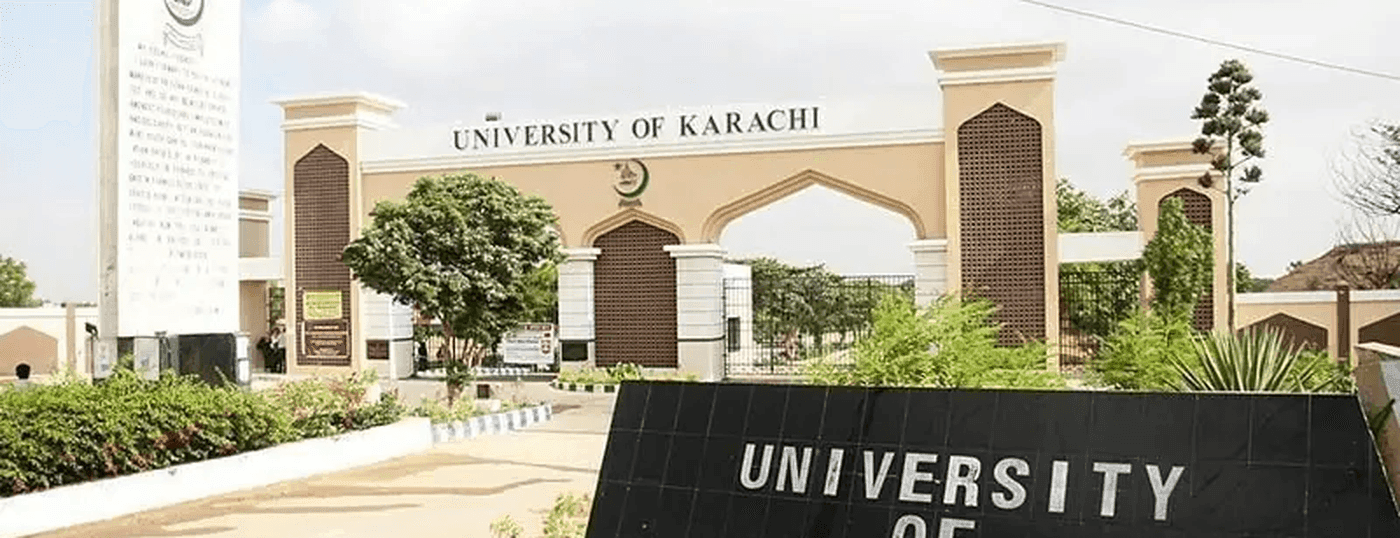

Pharmacognosy
Department of Pharmacognosy
Faculty of Pharmacy & Pharmaceutical Sciences
Pharmacognosy — from the Greek "pharmakon" (drug) and "gnosis" (knowledge) — is the study of natural bioactive substances from plants, animals, microbes and minerals, an integral part of the Faculty of Pharmacy since its founding in 1973.

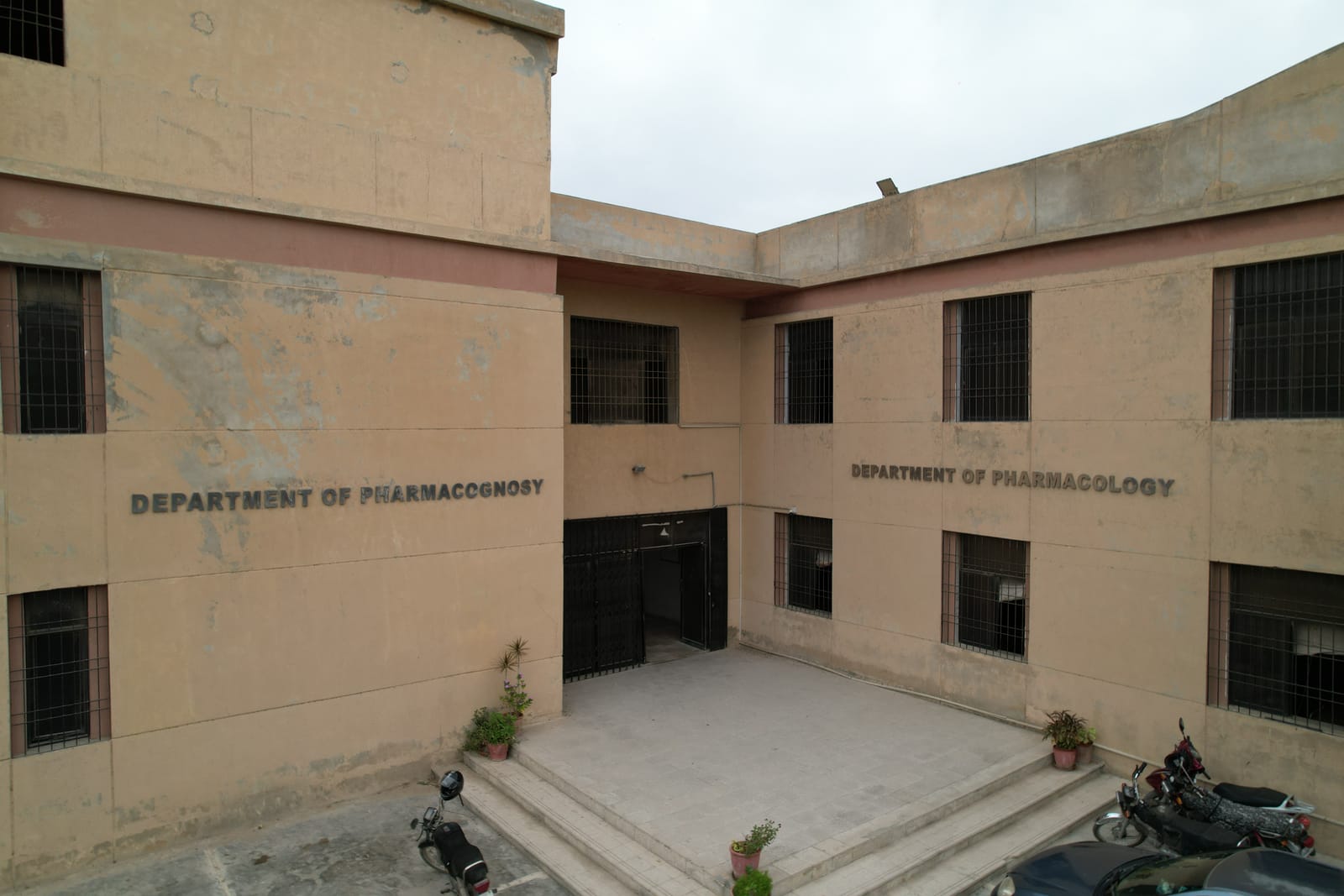
Our Focus
Natural Products & Phytochemistry
Phytochemistry
Extraction, separation, purification and structure elucidation of natural products.
Ethno-pharmacology
Medicinal value, distribution and biosynthetic pathways of plant drugs.
Nutraceuticals
Standardization of nutraceuticals and cosmeceuticals from natural sources.
Today it has grown into a well-established department that forms the backbone of pharmacy education in the Faculty of Pharmacy & Pharmaceutical Sciences — a highly interdisciplinary field drawing on botany, organic chemistry, biochemistry, pharmacology, zoology and ethno-medicine. The Department assists undergraduates toward a Pharm.D. degree and guides young investigators toward M.Phil./PhD research in Pharmacognosy.
CareersCareer Opportunities
Graduates work across the pharmaceutical industry (manufacturing, quality control, drug development), hospital and clinical pharmacy, regulatory bodies, academia, and research and development — with a particular focus on modernizing Pakistan's herbal drug industry on a scientific basis.
- An integral part of the Faculty of Pharmacy since 1973.
- Strong national interest in medicinal plants and traditional (Unani/Homeopathic) medicine informs research.
- Prepares graduates for Pharm.D., M.Phil. and PhD pathways.

Introduction
Chairman: Prof. Dr. Muhammad Mohtasheemul Hasan
The Faculty of Pharmacy was established in 1973 and comprised of four departments. Department of Pharmacognosy has been working since then as an integral part of the faculty. Today it has grown into a well-established department that is the backbone of pharmacy education in the Faculty of Pharmacy and Pharmaceutical Sciences.
Pharmacognosy is the portmanteau of two Greek words, pharmakon meaning drug, and gnosis meaning knowledge. It is the study of natural bioactive substances obtained from terrestrial and marine plants, animals, microbes and minerals for their physical, chemical, biochemical and biological properties, their taxonomy and ethno-biology.
It is one of the major areas of Pharmaceutical sciences; today a highly interdisciplinary science which include parts of botany, organic chemistry, biochemistry, pharmacology, zoology, anthropology, geography, ethno medicine, biotechnology etc.
This discipline covers wide range of topics such as sources of natural products, their chemical composition, medicinal value, distribution, ethno-pharmacological profile, biosynthetic pathways, isolation, evaluation, quality control, standardization, nutraceuticals and cosmeceuticals.
Pharmacognosy research topics encompasses identification of plant drugs, phytochemistry, extraction methods, separation, purification, identification and structure elucidation of natural products, phytotherapy, biologics, allergens, nutraceuticals, cosmeceutical and toxic manifestation of natural products. It also provides for the discovery of lead compounds for drug development, new methods of analysis for drugs, toxins and herbal preparations.
In Pakistan there has always been an immense interest in medicinal plants and also in traditional system of medicine–Unani and Homeopathic systems. The active chemical constituents of these plants are also used in the modern system of medicine–Allopathy. Traditionally, most of the population depends on natural sources of medicine. A vast majority does not have excess to modern medicine hence there is a huge scope to develop cheap drugs from locally available recourses to meet the needs of the country.
The Department offers to assists the undergraduates to earn a Pharm. D. degree and guide the young scientific investigators to earn either M.Phil. / Ph. D. degree in the field of Pharmacognosy. We further project that our undergraduates will be equipped to bring a better promise of tomorrow in pharmaceutical industry (manufacturing/quality control, drug development), hospital and clinical pharmacy, regulatory bodies, academics, research and development.
To fulfill the national requirement, Department of Pharmacognosy strives to provide professionals who could work in any Pharmaceutical industry or can be instrumental in modernizing herbal drug industry on scientific basis. Our graduates have an array of opportunities to work.
A quote from the Holy Quran:
“Then eat from all the fruits and follow the ways of your Lord laid down [for you]. There emerges from their bellies a drink (honey), varying in colors, in which there is healing for people. Indeed in that is a sign for a people who give thought”.
(Sūrat l-naḥl (The Bees): verse (69)
The Prophet Muhammad (Salallaahu alayhi wasallaam) said:
“Make use of the two cures: honey and the Qur’an”.
(Ibn Majah & others)
Hazrat Abu Hurairah States:
“I have heard from Rasool Allah (PBUH) that there is cure for every disease in black seeds except death and black seeds are Shooneez”.
Hippocrates, the father of modern medicine stated the following some 2,500 years ago:
“Let food be thy medicine and medicine be thy food”.
Faculty
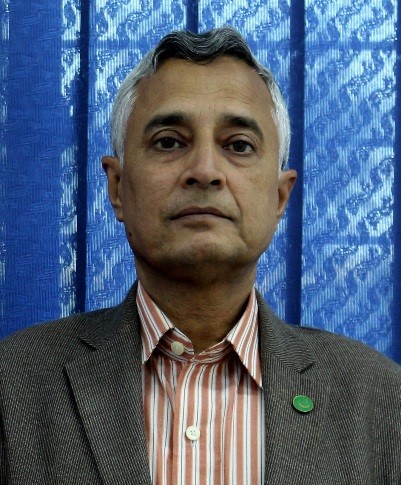 |
Dr. Iqbal Azhar Profile Professor Ph.D., M. Pharm., B. Pharm. |
|
 |
Dr. Muhammad Mohtasheemul Hasan Profile Professor Ph.D., M.Phil., B. Pharm. |
|
 |
Dr. Huma Shareef Professor Ph.D. |
|
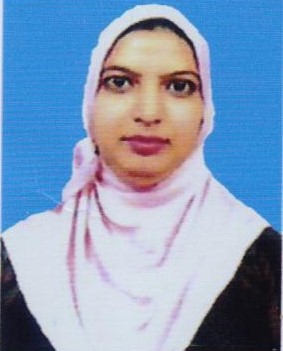 |
Dr. Maryam Ahmed Profile Associate Professor Ph.D., B. Pharm. |
|
 |
Ms. Farah Mazhar Profile Assistant Professor M.Phil., B. Pharm. |
|
 |
Dr. Safia Abidi Profile Assistant Professor Ph.D., M. Pharm., B. Pharm. |
|
 |
Dr. Salman Ahmed Profile Assistant Professor Ph.D., M.Phil., B. Pharm. |
Mission
Vision and Mission
The vision of the Department of Pharmacognosy is to prepare a study program that is in line with the most recent developments in the field and produce graduates who could meet the national and international needs in health care. Those enrolled under various programs will study the following topics:
- Natural product chemistry deals with the study of natural products, their extraction and isolation methods, structure elucidation
- Pharmacology of natural product relates to the biological activity of crude drugs, isolated compounds and their toxicities
- Ethanopharmedicine/Ethnopharmacologyis the subject that deals with the traditional medicine practices by different ethnic groups and indigenous people. It relates to traditional medicine, ethnobotany, ethnopharmacology, anthropology.
- Marine Pharmacognosy
Pakistan’s diverse and plentiful marine resources are the most promising avenue for future drug development. It deals with the study of unique chemical composition of marine plants and animals and their biological activity and pharmaceutical value.
- Biologics is the study of sources, structures, preparation, description and uses of vaccines, toxins, antitoxins, venoms, antivenins, antisera and etc.
- Allergens an Allergenic Preparations is the topic that describe various types of allergens and the development and preparation of vaccines used for their treatment.
- Biosynthesis describes the various mechanisms through which plants prepare their primary and secondary metabolites, chemotaxonomy and how these pathways can be used to develop synthetic and semisynthetic analogues of natural products.
- Quality Control/Quality Assurance Under this subject physical, chemical, and biological methods of analysis are studied to ensure the quality of crude drugs, plant extracts, nutraceuticals and pharmaceuticals.
- Standardization methods are developed to produce standardized extracts of plants and other natural resources.
- Biotechnology deals with methods for sustainable production of medicinally important natural products to meet the market requirement
Courses
Pharm.D Courses
| First Year | |||||
| 1st Semester | 2nd Semester | ||||
| Course No. | Title of Course | Cr. Hr. | Course No. | Title of Course | Cr. Hr. |
| - | - | PHG-312 | General Pharmacognosy | 3 | |
| Second Year | |||||
| PHG-411 | Pharmacognosy (Lab)-I | 3 | PHG-412 | Chemical Pharmacognosy-I | 3 |
| Third Year | |||||
| PHG-511 | Chemical Pharmacognosy-II | 3 | PHG-512 | Pharmacognosy (Lab)-II | 3 |
| - | - | PHG-514 | Natural Toxicants | 2 | |
| Fourth Year | |||||
| PHG-611 | Advance Pharmacognosy | 3 | - | - | - |
| Fifth Year | |||||
| PHG-713 | Clinical Pharmacognosy | 2 | - | - | - |
| Total 08 Courses making 22 Credit Hours in five years. | |||||
M.Pharm Courses
| 1st Semester | 2nd Semester | ||||
| Course No. | Title of Course | Cr.Hr. | Course No. | Title of Course | Cr.Hr. |
| PHG-801 | Analytical Pharmacognosy | 3 | PHG-802 | Spectroscopy of Natural Products | 3 |
| PHG-803 | AdvancePharmacognosy | 3 | PHG-804 | Seminar in Pharmacognosy | 3 |
| PHG-805 | Biosynthesis of Natural Products | 3 | PHG-806 | Chemotaxonomy | 3 |
| PHG-807 | Marine Pharmacognosy | 3 | PHG-808 | Fungal Metabolites | 3 |
| PHG-809 | Ethnopharmacognosy | 3 | PHG-810 | Structure Elucidation of Natural Products | 3 |
| PHG-811 | Advances in Natural Toxicants | 3 | PHG-812 | Cell Biotechnology | 3 |
| PHG-813 | Phytopharmaceutical Analysis | 3 | PHG-814 | Industrial Pharmacognosy Lab | 3 |
| - | - | - | PHG-816 | Phytomedicine | 3 |
| The student is reqired to study 24 credit hour courses. Five courses (15 Cr. Hrs.) in the 1st Semester and three courses (9 Cr. Hrs.) in the 2nd semester, while the thesis is mandatory | |||||
M.Phil Courses
| 1st Semester | 2nd Semester | ||||
| Course No. | Title of Course | Cr.Hr. | Course No. | Title of Course | Cr.Hr. |
| PHG-821 | Biostatistics | 3 | PHG-822 | Computer Application in Pharmacy | 3 |
| PHG-823 | Advances in Spectro-scopic Techniques | 3 | PHG-824 | Structure Elucidation of Natural Products | 3 |
| PHG-825 | Analytical Pharmacognosy | 3 | PHG-826 | Natural Toxicants | 3 |
| PHG-827 | Advances in Pharmacognosy | 3 | PHG-828 | Advance Phytophar-maceutical Analysis | 3 |
| PHG-829 | Cell Biotechnology | 3 | PHG-830 | Industrial Pharmacognosy | 3 |
| PHG-831 | Biosynthesis of Natural Products | 3 | PHG-832 | Phytomedicine | 3 |
| PHG-833 | Basics of Research Methodology | 3 | PHG-834 | Standardization of Phytomedicine | 3 |
| PHG-835 | Pharmacoeconomics | 3 | - | - | - |
| The student is required to study 24 credit hour courses. Four courses (12 Cr. Hrs.) in the 1st Semester and Four courses (12 Cr. Hrs.) in the 2nd semester, while the thesis is mandatory | |||||
Ph.D Courses
| 1st Semester | 2nd Semester | ||||
| Course No. | Title of Course | Cr.Hr. | Course No. | Title of Course | Cr.Hr. |
| PHG - 901 | Research Methodology | 3 | PHG-902 | Seminars on Current Advances in the Discipline | 3 |
| PHG -903 | Attending Seminars / Conferences/ Workshops/ Research Publications / Project Proposal for Funding | 3 | PHG-904 | Herbal Bioequivalence | 3 |
| PHG-905 | Marine Resource and Their Applications | 3 | PHG-906 | Agriculture Pharmacognosy | 3 |
| PHG-907 | Ethnopharmacognosy and Drug Discovery | 3 | PHG-908 | Advances in Clinical Pharmacognosy | 3 |
| PHG-909 | Research Seminar | 3 | PHG-910 | Research Publication / Project proposal for Funding | 3 |
| PHG-911 | Integrative Medicine | 3 | PHG-912 | Advances in Clinical Pharmacognosy | 3 |
| The student is required to study 18 credit hour courses during five year study program, while research work and the thesis is mandatory | |||||
Pharm-D Deficiency Course (under Semester System)
| 1st Semester | 2nd Semester | ||||
| Course No. | Title of Course | Cr. Hr. | Course No. | Title of Course | Cr. Hr. |
| PHG-713(D) | Clinical Pharmacognosy | 2 | PHG-514(D) | Natural Toxicants | 2 |
| Total 02 Courses making 04 Credit Hours in one year. | |||||
Programs
Program details (Degree, Eligibility Criteria)
The Bachelor’s degree in Pharmacy is Doctor of Pharmacy (Pahrm. D) which is offered by the faculty of Pharmacy on behalf of its four departments. Its eligibility criteria is established at the faculty level, while department is responsible for admissions in M.Phil. and Ph. D. programs.
Every year departmental board of studies devise a policy according to which the number of seats and admission criteria is worked-out for both M.Phil. and Ph. D. programs.
Eligibility Criteria (M.Phil.)
At least sixteen years of studies-4 years’ B. Pharm or Pharm. D., with at least second division. Entrance Test is conducted by the department which is mandatory for all the candidates. The test comprises of the following sections:
- Section-I English and Communication Skills 20%
- Section-II Subject knowledge 80%
Candidates are required to score at least 40% marks in section-I and 50% marks in section-II separately to be eligible for consideration for provisional admission.
All the students who qualify the test will be required to appear for an interview before Departmental Research Committee (DRC). The admissions are granted on the basis of the following
- The marks obtained in the prerequisite degree examination is given 50% weightage.
- The marks secured in the Entrance Test is given 30% weightage.
- The marks obtained in the interview is given 20% weightage
All selected candidates are required to complete 8 courses of 24 credit hours in two semesters. There are five courses of 3 credit hours each in Ist semester and three courses of 3 credit hours each in the 2nd semester. Candidates are required to attend at least 75% classes of each course. They must clear the course work with atlest CGPA of 3.0 . In case a student fails to get the desired CGPA, he/ she will be allowed to improve the grade (only once).
Eligibility Criteria (PhD)
Applicants are required to have M. Phil. or M. Pharm in Pharmacognosy from an H.E.C recognized university/institution. The admission is granted on the basis of entry test and Interview by the Departmental Research Committee. Distributions of interview marks are given below
Interview Criteria for Ph. D.
| Knowledge, Experience and Aptitude |
|
|
|
|||
| Research Experience (thesis/ project) | Research Dissemination (poster/project) | Publication | Oral Communication | Proposed Research Plan/Project | Total | |
| Max Marks | 20 | 10 | 20 | 25 | 25 | 100 |
| Marks obtained |
|
|||||
Marks Obtained out of 100 =
Comments
The test is conducted for those who have not admitted to M. Phil. program through the entry test (conversion from M. Phil to PhD). All selected students are required to complete 18 credit hour courses. Candidates are required to attend at least 75% classes of each course.
Facilities
Facilities
| 1 | Graduation | Labs (3) | |
| 2. | Post Graduate | Labs (3) | |
| 3(i) | Research Lab 1: | Chemical Research Lab | |
| 3(ii) | Research Lab 2: | Pharmacological / Biological Research Lab | |
| 3(iii) | Research Lab 3: | Standardization & Quality control Lab | |
| 4. | Seminar Library | 01 (Centralized Library) | |
| 5. | Computer Lab | 01 (Centralized Lab) |
Contact
For further information please contact:
DEPARTMENT OF PHARMACOGNOSY
UNIVERSITY OF KARACHI, KARACHI-75270
Telephone: 99261300-06 Ext: 2202
Email: pharmacognosy@uok.edu.pk
Apply to the Department of Pharmacognosy
Explore admissions pathways through the Faculty of Pharmacy & Pharmaceutical Sciences.