




Pharmaceutical Chemistry
Department of Pharmaceutical Chemistry
Faculty of Pharmacy & Pharmaceutical Sciences
One of the most important academic units of the Faculty of Pharmacy & Pharmaceutical Sciences, dedicated to the physical and chemical aspects of pharmaceuticals — organic, physical, analytical, instrumental and medicinal chemistry — with a focus on drug discovery and development.

Our Focus
Research & Teaching Excellence
Drug Design
Drug designing, development and product/process development of drugs.
Analytical Chemistry
Analytical aspects of drugs, kinetic studies and drug stability.
Nanotechnology
Emerging research in pharmaceutical nanotechnology.
The department currently has four Professors, two Associate Professors and four Assistant Professors — all PhD holders actively engaged in teaching and research. The department aims to promote a learning environment and train students in advanced specialized areas of pharmaceutical chemistry. Experienced research groups work across drug designing and development, product and process development, analytical aspects of drugs, nanotechnology, kinetic studies and drug stability.
CareersCareer Opportunities
Graduates are trained to become active, skilled and responsible pharmacists for academia, industry, hospitals and government. They can work in production, quality control, marketing and drug regulatory roles across the pharmaceutical industry, as part of healthcare teams alongside doctors and paramedical staff, or in administrative and general management roles within government health departments. Pharmacists with M.Phil. or PhD degrees can also join teaching and research organizations.
- Courses grounded in organic, physical, analytical, instrumental and medicinal chemistry.
- Active research groups in drug design, nanotechnology and drug stability.
- All teaching staff are PhD holders engaged in ongoing research.

Introduction
Chairperson: Prof. Dr. Asia Naz
Department of Pharmaceutical Chemistry is one of the most important academic units of the Faculty of Pharmacy and Pharmaceutical Sciences. Department is dedicated to provide sound education in the field of Pharmaceutical Chemistry and deals with the physical and chemical aspects of Pharmaceuticals. Courses offer by the Department are based on organic chemistry, physical chemistry, analytical, instrumental and medicinal chemistry, with a focus on drug discovery and development. Currently, the department has four Professors, two Associate Professors, and four Assistant Professors. All are Ph.D. holders and actively engaged in teaching and research. The department aims to promote learning environment and training of students in the advanced specialized areas of the field.
Specific Research Areasbr/> The department has a rich history of excellence in research. Experienced and actively growing research groups are working in the disciplines of drug designing and development, product and process development of drug, analytical aspects of drug, nanotechnology, kinetic studies and drug stability. Researchers are working with different.
Career Opportunities
Graduate program of the department is dedicated to educate and train the students to produce active, skilled and responsible future pharmacist for academia, industry, hospitals and government setups. They can go in production, quality control, marketing and drugs regulatory department of different pharmaceutical industries. They can also work as part of a healthcare team comprising doctors, pharmacists and paramedical staff. They can play an effective role as drug experts, able to select best treatments for managing patient care. Apart from these, there is a number of opportunities available in administrative and general management sites in government health department. Pharmacists with M. Phil. and or Ph.D. degree can also join teaching and research organizations.
Faculty
Professor Emeritus
Dr. Zafar Saied Saify
Professors
Dr. Faiyaz H. M.Vaid
Dr. Mansoor Ahmed
Dr. Nousheen Mushtaq
Dr. Afaq Ahmad Siddiqui
Dr. Sohail Hassan
Dr. Asia Naz
Dr. Safila Sharif
Assistant Professors
Dr. Shazia Haider (T)
Dr. Rubina Siddiqui (T)
Dr. Urooj Nazim (T)
Mission
Mission
- Providing firm groundings in the field of drug designing, stability, method development, validation and quality control.
- Laboratory experience supported by an excellent teaching staff.
- Offering standard education with professional and personal grooming to the future Pharmacists.
Vision
The main focus of the department is to:
- Improve knowledge and skills of graduate and post graduate in the related topics.
- Inculcate decision making power and confidence of students.
- Progress in their respective field like industry, hospitals, teaching and research
Courses
Pharm.D Courses
| First Year | |||||
| 1st Semester | 2nd Semester | ||||
| Course # | Title of Course | Cr. Hr. | Course # | Title of Course | Cr. Hr. |
| PHC-303 | Organic Chemistry | 3 | PHC-304 | Organic Chemistry (practical) | 3 |
| PHC-313 | Pharmaceutical Mathematics | 3 | PHC-306 | Pharmaceutical Statistics | 3 |
| Second Year | |||||
| PHC-405 | Physical Chemistry I | 3 | PHC-406 | Physical Chemistry I (Practical) | 2 |
| - | - | - | PHC-408 | Physical Chemistry II | 3 |
| Third Year | |||||
| PHC-503 | Physical Chemistry II (Practical) | 3 | PHC-506 | Preparation And Quality Control (Practical) | 3 |
| PHC-505 | Theoretical Basis of Quality Control | 3 | PHC-508 | Pharmaceutical Analysis-1 | 3 |
| Fourth Year | |||||
| PHC-607 | Pharmaceutical Analysis-1 (Practical) | 3 | PHC-608 | Pharmaceutical Analysis-1I | 3 |
| - | - | - | PHC-610 | Medicinal Chemistry-I | 3 |
| Fifth Year | |||||
| PHC-707 | Pharmaceutical Analysis-1I (Practical) | 3 | PHC-710 | Medicinal Chemistry-III | 3 |
| PHC-709 | Medicinal Chemistry- II | 3 | - | - | - |
| Total 17 Courses making 50 Credit Hours in five years. | |||||
M.Phil. Courses
| Course Work | |||||
| 1st Semester | 2nd Semester | ||||
| Course # | Title of Course | Cr. Hr. | Course # | Title of Course | Cr. Hr. |
| PHC-821 | Biostatistics | 3 | PHC-822 | Computer Application in Pharmacy | 3 |
| PHC-823 | Drug Design | 3 | PHC-824 | Macromolecular | 3 |
| PHC-825 | Spectrophotometric Analysis | 3 | PHC-826 | Carbohydrate Chemistry | 3 |
| PHC-827 | Drug Stability | 3 | PHC-828 | Spectroscopic Techniques In Structure Elucidation | 3 |
| PHC-829 | Clinical Chemistry | 3 | PHC-830 | Physical Organic Chemistry | 3 |
| PHC-831 | Electroanalytical Techniques | 3 | PHC-832 | Quality Control and Quality Assurance | 3 |
| PHC-833 | Solvent Extraction and Chromatographic Techniques | 3 | - | - | - |
| PHC-835 | Medicinal Chemistry | 3 | - | - | - |
| PHC-837 | Polymer Chemistry | 3 | - | - | - |
| Out of 15 courses the students have to opt 8 courses (each course is of 3 Cr. Hrs.) in two semester, while the thesis is mandatory which is of 6 Cr. Hrs.. | |||||
Ph.D Courses
| Course Work | |||||
| 1st Semester | 2nd Semester | ||||
| Course # | Title of Course | Cr.Hr. | Course # | Title of Course | Cr. Hr. |
| PHC-901 | Research Methodology | 3 | PHC-902 | Kinetic Methods of Analysis | 3 |
| PHC-903 | Environmental Pharmacy | 3 | PHC-904 | Advanced Medicinal Chemistry | 3 |
| PHC-905 | Drug Development | 3 | PHC-912 | Seminars on Current Advances in the Discipline | 4 |
| PHC-911 | Research Seminars | 4 | PHC-914 | Development of Research Proposal for Funding Funding agenesis | 6 |
| PHC-913 | Thesis and Manuscript Writing Skills | 4 | - | - | - |
| Total 9 Courses making 33 Credit Hours. Student will complete 18 credit hours Mandatory: Thesis on Research work | |||||
Pharm. D (Deficiency) Courses
| 1st Semester | 2nd Semester | ||||
| Course # | Title of Course | Cr.Hr. | Course # | Title of Course | Cr.Hr. |
| PHC-303(D) | Pharmaceutical Chemistry (Organic and Inorganic) | 2 | PHC-406(D) | Pharmaceutical Chemistry Physical (Lab) | 2 |
| PHC-505(D) | Pharmaceutical Chemistry (Theoretical Basis of Quality Control) | 2 | PHC-707(D) | Pharmaceutical Chemistry (Analysis) | 2 |
| PHC-710(D) | Pharmaceutical Chemistry (Medicinal) | 3 | - | - | - |
| Total 5 Courses making 11 Credit Hours in one year | |||||
Syllabus
First Professional First Semester
PHARMACEUTICAL CHEMISTRY PHC-303
Organic Cr. Hrs. 3
1. Introduction to pharmaceutical chemistry, classification and nomenclature of organic pharmaceutical compounds. hyperconjugation, steric effects inductive effect and mesomeric effect,.
2. Nucleophilic and electrophilic substitution reaction in aromatic system. Theory of resonance.
3. Orientation in electrophilic substitution reactions on benzene ring.
4. Organic reactions: Baeyer-Villiger oxidation; Diels Alder reaction; Grignard’s reaction, metal hydride reduction and Wolf Krishner reduction, Friedel Craft’s reaction, Perkin reaction, Cannizzaro reaction.
5. Carbonium ion rearrangements; Pinacol-pinacolone, Wagner-Merrwein, Wolf, Hofmann and Beckmann rearrangments.
6. Carbanions; condensation reaction (Aldol condensation; Favorskii rearrangment; Wittig reaction).
7. Stereoismerism, optical isomerism, geometrical isomerism, tautamerism of carbonyl compounds, resolution of reacemic mixture and conformational analysis.
8. Free radicals: Introduction, structure and stability.
9. General methods of preparations, properties, identification test and pharmaceutical applications of the following classes and their analogs:
alcohols, phenols, ethers, aldehydes, ketones, carboxylic acids, esters, amines and aniline.
Books Recommended
1. Andrew Streitwieser, Jr., Clayton H. Heathcock. Introduction to Organic Chemistry. Second edition. Macmillan Publishing Co., Inc., New York (1981).
2. Graham Solomons T.W. Organic Chemistry. Fifth edition, John Wiley & Sons, Inc. (1992).
3. Marye Anne Fox and James K. Core Organic Chemistry. Whitesell, Jemes and Bartlett Publisher (1997).
4. by Peter Sykes. A Guide Book to Mechanisms in Organic Chemistry. Fourth edition, Longman Group Ltd. (1978).
5. Jayashree Gost, S. A Textbook of Pharmaceutical Chemistry by Chand and Company Ltd. (1997).
PHARMACEUTICAL CHEMISTRY PHC-305
Inorganic Cr. Hrs. 2
1. Elements
Periodic classification of elements general aspects and group properties of each specific class of elements.
2. Essential and Trace Elements
To study the role of essential and trace elements in biological systems and their toxicity.
3. Inorganic Drugs
Occurance, preparation, physical characteristics, chemical properties, purity test, incompatibilities, assay and pharmaceutical uses of inorganic drugs such as:
Aluminum hydroxide Ammonium chloride
Sodium carbonate Sodium chloride
Sodium thiosulphate Sodium tetraboarate (borax)
Magnesium carbonate Potassium chloride
Lithium carbonate Sodium nitrite
Calcium gluconate Calcium carbonate
Calcium chloride Calcium lactate
Ferrous fumarate Ferrous sulfate
Ferrous gluconate Iron polysaccharide
Silver nitrate Antimony gluconate
Iodine Hydrogen per oxide
Boric acid Zinc oxide
4. Radiopharmaceuticals
Basic properties, production, quality control, stability, clinical and medicinal applications of radioisotopes used in pharmacy and medicine preparations of diagnostic and therapeutic agents.
Books Recommended
1. Roger’s Inorganic Pharmaceutical Chemistry of Lea and Febiger, Philadelphia, USA.
2. Mellor’s Modern Inorganic Chemistry, Longman Green and Co., Ltd., London.
PHARMACEUTICAL CHEMISTRY PHC-313
Pharmaceutical Mathematics Cr. Hrs. 3
1. Algebra
Common and natural logarithm, solution of linear and quadratic equations. Equations reducible to Quadratic form, solution of simultaneous equations. Arithmetic. Geometric and harmonic progressions. Arithmetic, geometric and harmonic means, permutations and combinations. Binomial Theorem: Simple application.
2. Trigonometry
Measurement of angels in radian and degrees. Definitions of circular functions. Derivation of circular function for simple cases ant trigonometry identities.
3. Analytical Geometry
Coordinates of point in a plane. Distance between two points in a plane. Locus. Equations of straight parallel and perpendicular lines. Equation of parabola, circle and ellipse.
4. Differential Calculus
Limit, concept of derivations. Rules of differentiation, examples on the evaluation of derivations. Derivatives of algebraic, trigonometric, exponential and logarithmic functions, partial derivations, higher order derivatives. Maxima and minima points of inflections.
5. Integral Calculus
Concept of integration. Rules of integration’s. Integration’s of algebraic, exponential, logarithmic and trigonometric functions by using different techniques and numerical integration.
Books Recommended
1. Text Book of Algebra and Trigonometry for Class XI and XII (New edition).
2. Edvards, C.H. Jr. and David E. Penney. Calculus and Analytical Geometry (1995).
First Professional Second Semester
PHARMACEUTICAL CHEMISTRY PHC-304
Organic and Inorganic (Practical) Cr. Hrs. 3
1. Identification of unknown simple organic compounds containing acidic, basic and neutral functional groups.
2. Estimation of functional groups in the following drugs.
Sulpa drugs, aspirin, paracetamol, benzyl penicillin, bromisoval, methenamine.
3. Determination of iodine and saponification value, and ash content.
4. Preparation of some organic and inorganic compounds
Acetanilide, iodoform, nitrophenol, 3-nitrophthalic acid, benhydrol, 2, 4-dinitro-chlorbenzene, ferrous sulfate, aluminum hydroxide, magnesium carbonate, sodium carbonate.
Books Recommended
1. Arayne M. Saeed. Manual of Qualitative Organic Analysis, BCCT, University of Karachi, Karachi, Pakistan.
2. British Pharmacopoeia, Stationary Press, Royal Society of Pharmaceutical Press, London.
3. United State Pharmacopoeia, United State Pharmacopoeial Convention, Inc., 12601. Twinbrook Parkway, Rockyville M.D. 20852 USA.
4. Lovis F. Fiesev D.C. Experiments in Inorganic Chemistry, Health and Company, Boston.
5. Vogel Text Book of Quantitative Chemical Analysis, Longman, London.
6. Remington Practical of the Science and Pharmacy, Mack Publishing Company, Eston, Pennsylvania, USA.
PHARMACEUTICAL CHEMISTRY PHC -306
Pharmaceutical Statistics Cr. Hrs. 3
1. Description of statistics: Descriptive statistics: What is statistics? Importance’s of statistics. What is biostatistics? Application of statistics in biological and pharmaceutical sciences. How samples are selected.
2. Organizing and displaying data: Variables, quantitative and qualitative variables, univariate data, bivariate data, random variables. Frequency table, diagrams, pictograms, simple bar charts, multiple bar charts, histograms.
3. Summarizing data and variation: The mean, the median, the mode, the mean, deviation, the variance and standard deviation, coefficient of variation.
4. Curve Fitting: Fitting a straight line, fitting of parabolic or high degree curve.
5. Probability: Definitions probability, rules of probability. Distributions (binomial and normal distributions)
6. Shape regression and correlation: Introduction simple linear regression model. Correlation co-efficient
7. Test of hypothesis and significance: Statistical hypothesis, level of significance, test of significance. Confidence intervals. Test involving binomial and normal distributions.
8. Student “T” and Chi-square distribution test of significance based on “T”. “F” and square distributions.
9. Analysis of variance: One-way classification, two-way classification, partitioning of suen of squares and degrees of freedom. Multiple compression tests such as LSD. The analysis of variance models
Books Recommended
1. Ronalde Walpole. Introduction to Statistics, 3rd edition.
2. Danniel, W.W. Biostatistics, A Foundation Analysis in the Health Sciences, 4th edition (1987).
3. Remington R.D. Schork, M.A. Statistics with Application to the Biological and Health Science.
Second Professional First Semester
PHARMACEUTICAL CHEMISTRY PHC-405
Physical – I Cr. Hrs. 3
1. Physical Properties and Molecular Constitution
Surface and interfacial tension, dielectric constant, dipole moment, refractive index, optical rotation, density, specific gravity, viscosity, molar refraction, parachor.
2. Colloids and Colloidal System
Characteristics features of colloids, type of colloidal system, properties of colloids and colloidal systems. Preparation and purification of colloidal solutions, stability of colloids, pharmaceutical applications.
3. Solutions
Definition types and properties, concentration, solubility and solubilization, factors affecting solubility, solvents used in pharmacy, solutions of electrolytes and non-electrolytes, isotonic solutions, dissolution and dissolution rates, distribution phenomena, theory of distillation, molecular weight determination.
4. Ionic Equilibria
Modern theory of acids, bases and salts, acid-base equilibria, pH and acidity constants, theory of indicators, buffers and buffered system.
5. Phase Equilibria
Phase rule and its applications to one and two component system.
Books Recommended
1. Gross J.M. and Wiseall B. Principle of Physical Chemistry, Macdonald and Evans Plymouth, England.
2. Gareth Morris J. A Biologists Physical Chemistry, Edward Arnold, London.
3. Martir A.N. Physical Pharmacy, Lea and Febiger, Philadelphia.
4. Chang R. Physical Chemistry with Application to Biological System. Collier Macmilliar Publisher, London.
5. Barrow G.M. Physical Chemistry. McGraw-Hill, London.
Second Professional Second Semester
PHARMACEUTICAL CHEMISTRY PHC-406
Physical -I (Practical) Cr. Hrs. 3
1. Determination of specific gravity of liquids/syrups using an Ostwald pycnometer.
2. Determination of the viscosity of a liquid by Ostwald viscometer.
3. Determination of the percent composition of a mixture of ethanol and water by viscometric method.
4. Determination of the surface tension of a pure liquid by the dropsize method.
5. Determination of the percentage composition of mixture of ethanol and water by surface tension method.
6. Determination of interfacial tension between benzene and water by the dropsize method.
7. Determination of the parachor value of an organic liquid
8. Determination of solubility of benzoic acid over a range of temperatures and calculation of its heat of solution.
9. Determination of the mutual solubility curve of phenol and water.
10. Preparation of buffer solutions and measurement of pH.
11. Distillation of a mixture.
12. Distillation of an azeotropic mixture with minimum/maximum boiling point.
13. Determination of variation of miscibility with temperature.
14. Absorption curve of an indicator as a function of pH.
15. Composition of a complex ion in solution.
16. Determination of the partition coefficient of I2 between CCl4 and H2O.
17. Determination of molar refraction of a solid substance by dissolving it in a solvent.
18. Molecular weight determination.
Books Recommended
1. Yadav J.B. Advanced Practical Physical Chemistry, Geol Publisher House, Meenet, India.
2. Vogel’s Text Book of Quantitative Inorganic Analysis including Elementary Instrumental Analysis, Longman, London.
PHARMACEUTICAL CHEMISTRY PHC-408
Physical-II Cr. Hrs. 3
1. Electrochemistry
Definition, resistance, conductance, specific conductance, conductivity and its measurement, conductometric titrations, electrochemical cells, determination of pH and redox potentials, electrophoresis and electrodialysis.
2. Photochemistry
Definition light absorption and excitation of organic compounds, photophysical and photochemical processes, photochemical reactions, photosensitisation and photocatalysis, photolysis of medicinal compounds and photostabilization, high energy radiations.
3. Solid and Crystalline State
Formation of solids, types of solids, nature of amorphous and crystalline solids, crystal systems, determination of crystal structure, polmorphism.
4. Chemical Kinetics
Rates and order of reactions, influence of temperature and other factors on reaction rates, acid-base catalysis, decomposition of medicinal compounds, accelerated stability analysis, kinetics of enzyme catalysed reactions.
5. Thermodynamics
First and second law of thermodynamics, thermochemistry, relationship between free energy, entropy and equilibrium constant, free energy functions and applications.
Books Recommended
1. Gareth Morris J.A. Biologist’s Physical Chemistry. Edward Arnold, London.
2. Marlin A.N. Physical Pharmacy, Lea and Febiger, Philadelphia.
3. Chang R. Physical Chemistry with Application to Biological System. Collier Macmillan Publisher, London.
4. Barrow G.M. Physical Chemistry, McGraw Hill, London.
5. Gross J.M. and Wiseall B. Principle of Physical Chemistry. MacDonald and Evans Publisher, England.
Third Professional First Semester
PHARMACEUTICAL CHEMISTRY PHC-503
Physical –II (Practical) Cr. Hrs. 3
1. Conductometric determination of the ionization constant of a weak acid.
2. Conductometric determination of the solubility of sparingly soluble salt.
3. U. V. absorption spectra of aromatic compounds and geometric isomers.
4. Determination of the wavelength of maximum absorbance and molar extinction coefficient of a given sample.
5. Determination of the first-order rate constant for acid catalysed hydrolysis of a given sample.
6. Determination of the first-order rate constant for the decomposition of a given sample.
7. Determination of effect of change of temperature in the rate of reaction.
8. To study the stability of a drug subjected to various stress conditions
9. Determination of heat of neutralization of HCl and NaOH.
10. Determination of heat of vapourization / transition of a given sample.
11. Determination of heat of solution from solubility.
12. Determination of an equilibrium constant by distribution method.
Books Recommended
1. Yadav J.B. Advanced Practical Physical Chemistry. Geol Publishing House, Meenet, India.
2. Greaser C.S. and Davies A.M.C. Analytical Application of Spectroscopy. Royal Society of Chemistry, London.
3. Knowles and Burgess C. Eds. Practical Absorption Spectroscopy. Chapman and Hall, London.
PHARMACEUTICAL CHEMISTRY PHC-505
Theoretical Basis of Quality Control Cr. Hrs. 3
1. Pharmaceutical chemistry and its relation to other sciences.
2. Brief historical outline.
3. Raw material for drugs
4. Sources of impurities in pharmaceuticals.
5. Purity and its control.
6. Testing and determination of water.
7. Survey of analytical methods
8. Quantitative and qualitative analysis (general information)
9. Pharmacopoeial tests and specifications.
10. Standardization of pharmaceuticals and formulated products.
11. Quality control system for drugs and pharmaceuticals
12. Causes of poor quality and general requirements.
13. Total quality management, a new approach.
14. Sampling techniques, validation and statistical treatment of analytical data.
Books Recommended
1. Watson D.G. Pharmaceutical Analysis – A Textbook of Pharmacy, Student and Pharmaceutical Chemistry. Churchill Livingston (1999).
2. Conners K.A. A Textbook of Pharmaceutical Analysis. 2nd edition, Wiley Interscience, New York, ISB No.471-16855.
3. Higuchi T. and Brochmann Hanssen E. Pharmaceutical Analysis. Interscience, New York.
4. Backet and Stenlake. Practical Pharmaceutical Chemistry, Royal Press, London (1998).
Third Professional Second Semester
PHARMACEUTICAL CHEMISTRY PHC-506
Preparation and Quality Control (Practical) Cr. Hrs. 3
1. Preparation/synthesis, identification and purity determination of the following important pharmaceutical compounds as mentioned in B. P and U. S. P.
Paracetamol, salicylic acid, methyl salicylate, azobenzene, benzoic acid. 5-Hydroxy-1, 3-benzoxazol-2-one, aspirin, p-nitrosophenol, 3-nitrophthalic acid, o-Chlorobenzoic acid
2. Limit tests as mentioned in pharmacopoeias for lead, arsenic, chlorides, sulphates, iron and heavy metals
Book Recommended
1. Vogel’s Text Book of Quantitative Organic Chemistry, Longman, London.
PHARMACEUTICAL CHEMISTRY PHC-508
Pharmaceutical Analysis –1 Cr. Hrs. 3
To study the principles and applications of the following methods in the drug analysis and development
1. Chemical Methods
Titrimetric methods, gravimetric methods, solvent extractions methods, gasometric methods.
2. Electro Chemical Methods
Potentiometry, polarography , amperometry, colourimetory, conductometry
3. Optical Methods
Refractometry, polarometry, fluorimetry.
Books Recommended
1. Vogel’s Textbook of Quantitative Inorganic Analysis including Elementary Instrumental Analysis, Longman, London, ISBN 0582-46321.
2. James J. Lingane Electro Analytical Chemistry, Interscience Publisher, Inc., London.
3. Howard A. Strobel. Chemical Instrumentation A Systematic Approach, Addison-Wesley Publishing Company, London.
4. Bond A.M. Modern Polarographic Method in Analytical Chemistry, Mercel Dekker, New York.
5. Sawyer D.T., Ed. Electro Analytical Studies of Biological System. American Chemical Society, Washington, D.C.
Fourth Professional First Semester
PHARMACEUTICAL CHEMISTRY PHC-607
Pharmaceutical Analysis –1 (Practical) Cr. Hrs. 3
1. Assay of pharmaceutical compounds based on chemical methods such as acid – base titration, oxidation-reduction titration, complexometric titration, gravimetric, solvent extraction, and gasometric methods.
2. Potentiometric determination of pH of a solution and titration of an acid.
3. Potentiometric determination of the strength of unknown solution of HCl with NaOH.
4. Potentiometric determination of strength of each acid in a mixture of HCl and CH3COOH using standard alkali.
5. Polarographic determination of the amount of nitrobenzene in solutions.
6. Polarographic study of quinhydrone.
7. Conductometric determination of the equivalent point of titration of HCl with NaOH
8. Determination of refractive index of liquids by Abbe-refractometer.
9. Refractometric determination of the concentration of alcohol in solutions.
10. Determination of a 10% solution of calcium chloride by Refratrometer method.
11. Determination of the composition of unknown mixture of two liquids by refractive index measurement.
12. Polarometric determination of concentration of sugar in a given solution.
13. Polarometric determination of the percentage of two optically active substances in a given solution.
14. Fluorimetric determination of a standard drug in a given sample.
Books Recommended
1. Skoog, Holler and Nieman. Principle of Instrumental Analysis. 5th edition, 2000.
2. Bauer, H.H., Christian, G.D. and O’Reilly. J.E. Instrumental Analysis, Allyun and Bacon Boston, 1978, ISBN 0-205-06556-2.
3. Kolthof, I.M., Sandell, E.B., Meehan, E.J. Quantitative Chemical Analysis, Macmillan Company, New York.
4. Pieper, J.A. and Rutledge, D.R. Current Concept Laboratory Techniques for Pharmacist, Upjohn, Kalamazoo, M.I.
5. Vogel’s Textbook Quantitative Inorganic Analysis.
6. Moffat A.C., Ed. Clarkes. Isolation and Identification of Drugs. Pharmaceutical Press, London.
7. British Pharmacopoeia.
Fourth Professional Second Semester
PHARMACEUTICAL CHEMISTRY PHC-608
Pharmaceutical Analysis–II Cr. Hrs. 3
To study the principles and applications of the following methods in the drug analysis and development
1. Spectroscopic Methods
Spectrophotometry (UV, Visible and Infrared), atomic absorption spectroscopy, mass spectrometry, nuclear magnetic resonance spectrometry, x-ray spectroscopy.
2. Chromatographic Methods
Thin layer chromatography, column chromatography, gas-liquid chromatography, high performance liquid chromatography, ion-exchange chromatography, size exclusion or gel chromatography.
Books Recommended
1. William Kemp. Organic Spectroscopy, Macmillan Press, London.
2. Creaser C.S. and Davies A.M.C. Eds. Analytical Application of Spectroscopy. Royal Society of Chemistry, London.
3. Banwell C.N. Fundamental of Molecular Spectroscopy. McGraw-Hill, London.
4. Yost R.W., Ettre L.S. and Conlon R.D. Practical Liquid Chromotography, Perkin Elmer, USA.
5. Roger, Crossley, Chirality and the Biological Activity of Drugs, C.R.C. Press, London.
6. Lough W.J. and Wainer I.W. Chirality in Natural and Applied Sciences. CRC Press, London.
7. Wuthrick, K. NMR of Protein and Nucleic Acid. Silverstion, R.M., Bassler and Morril. Spectrometric Identification of Organic Compounds. Fifth edition.
8. Derome, A.F. Modern NMR Technique for Chemistry Research.
9. Golden W. Eving. Instrumental Methods of Chemical Analysis. McGraw Hill, London.
PHARMACEUTICAL CHEMISTRY PHC-610
Medicinal – I Cr. Hrs. 3
To study the following with special reference to pharmaceutical applications.
1. Introduction to medicinal chemistry.
2. Drug designing, discovery of lead structure (different approaches).
3. Classification of drugs on the basis of sources, structure, site of action and mode of action.
4. Drug receptor interaction, structure activity relationship, physico chemical properties of drugs, structural features of drugs.
5. Drug metabolism, inactive metabolites, biologically active metabolites, chemically reactive metabolites, phase I and phase II reactions.
6. Preparation and properties of medicinally important heterocyclic compounds such as: pyrrol, furan, thiophene, pyridine, pyrimidine and pyrazine.
7. Preparation and properties of heterocyclic compounds in which benzo-ring fused with five and six membered ring containing one heteroatom: indole, quinoline and Isoquinoline.
8. General properties, chemistry, biological action, structure activity relationship and therapeutic applications of the following.
Alicyclic compounds: Cyclopropane, terpenes, citral, pinene, camphor, menthol, carotenes.
Alkaloids: Atropine, morphine and related compounds (codeine, thebaine), ergotamines, reserpine, ephoedrine.
Vitamins (water and fat soluble): B1, B2, B6, B12, folic acid, nico-tinic acid, biotin, pantothenic acid, ascorbic acid. A, D, E and K.
Hormones (steroidal and protenious): Testosterone, progesterone, estrogen, aldosteron, cortisol, insulin, glucagon, oxytocin and vassopressin.
Books Recommended
1. Wilson and Gisvold’s Textbook of Organic Medicinal and Pharmaceutical Chemistry. 10th edition, Lippincott-Raven Publisher, 1998.
2. William O. Foye, Thomas L. Lemke and David A. William. Principles of Medicinal Chemistry, 4th edition, 1995.
3. Burger’s Medicinal Chemistry and Drug Discovery, edited by E. Wolff, 6th edition, Wiley Interscience, New York, 2003.
4. Hansch C, Sammes P.G. Toylor J.B. Comprehensive Medicinal Chemistry, Pergamon Press, Oxford, 1990.
5. Perum J. and Propst C.L. Computer-Aided Drug Design Methods and Applications. Marcel Dekker Inc., New York, 1989.
6. Quantitative Drugs Design, Vol.8, Y.C. Mastin, Mercel Dekker Inc., New York, 1978.
7. Smythies J.R. and Bradley R.J., Receptors in Pharmacology, Mercel Dekker Inc., New York, 1978.
8. Drug Interaction, 2nd edition, Stockely H., Black Well, Scientific Publication, London, 1991.
9. King F.D. Medicinal Chemistry, Principles and Practice, Royal Society of Chemistry, Thomas Graham Hose, The Science Park Cambridge CB4, 4WF, 1994.
10. Hassany, Adoul-enein, Irving W. Wainer. The Impact of Stereochemistry on Drug Development and Use. John Wiley and Sons, Inc., New York, 1997.
11. Richard B. Silver. The Organic Chemistry of Drug Design and Drug Action. Academic Press, Pnen, Inc., USA, 1992.
12. Gary Walsh. Biopharmaceutical and Biotechnology, John Wiley and Sons, U.K., 1999.
Final Professional First Semester
PHARMACEUTICAL CHEMISTRY PHC-707
Pharmaceutical Analysis–II (Practical) Cr. Hrs. 3
1. Assay of pharmaceutical compounds based on spectrophotometric methods.
2. Separation, identification and quantitation of a drug substance by chromatographic methods such as TLC, GLC, HPLC.
3. To study the methods development procedure of a drug substance by UV-Visible spectroscopy/TLC/GLC/HPLC.
4. To study the experimental methodology of validation of a drug substance by UV-Visible spectroscopy/TLC/GLC/HPLC.
Books Recommended
1. Guilbult G.G. and Hargis L.G. Instrumental Analysis Manual, Marcel Dekker.
2. Meloan C.E. and Kiser R.W. Problems and Experiments in Instrumental Analysis, Columbus Marrill C.E.
3. Beaven G.H., Johnson E.A., Willis H.A. and Miller R.G.J. Molecular Spectroscopy Method and Application in Chemistry, Macmillan, New York.
4. Edisbury J.R. Practical Hints on Absorption Spectrometry, Hilger and Watts, London.
5. West W. Chemical Application of Spectroscopy. Wiley, New York.
6. Brand J.C.D. and Eglinton G. Application of Spectroscopy of Organic Compounds. Davey, New York.
7. William D.H. and Fleming I. Spectroscopy Methods in Organic Chemistry. McGraw-Hill, New York.
8. British Pharmacopoeia.
9. USP
PHARMACEUTICAL CHEMISTRY PHC-709
Medicinal–II Cr. Hrs. 3
To study the chemistry, structure, mechanism of action, structure activity relationship and therapeutic applications of the following.
1. Analgesic and Antipyretics
Paracetamol, salicylic acid analogues, quinolines derivatives pyrazolone and pyrazolodines, N-arylanthranilic acids, aryl and heteroaryl acetic acid derivatives.
2. Local Anaesthetics
Benzoic acid derivatives, lidocaine derivatives (anilides), amino benzoic acid, miscellaneous compounds such as: Procaine, lignocaine, eucaine, cocaine and benzociane.
3. Central Nervous System Depressants
General anaesthetics, inhalation anesthtics, ultrashort acting barbiturates, dissociative anesthetics such as cyclopropane, halothane, nitrous oxide, chloroform, thiopental sodium, ketmaine, methohexital, thioamylal sodium, fantanyl citrate, tribromo ethanol.
Anxiolytics, sedative, hypnotics, such as benzodiazepines, barbiturates, paraldehyde, glutethimide, chloral hydrate and alcohols.
Anti-convulsants such as barbiturates, hydantoins, oxazolidinediones, succinimides, benzodiazepines.
Antipsychotics, such as phenothiazines, fluorobutyrophenones, ?-aminoketones, banzamides,
CNS depressants with Skeletal Muscle Relaxant Properties.
4. Central Nervous System Stimulants
Analeptics, picrotoxin, methylxanthines, monoamine oxidase inhibitors, tricyclic compounds. Indolethylamines, 2-phenylehylamines.
5. Diuretics
Carbonic anhydrase inhibitors, thiazide and thiazide like diuretics, high ceiling or loop diuretics, potassium sparing diuretics and miscellaneous compounds such as mercaptomerin, meralluride, Thiazides, sprironolactone, theophylline, furosemide, acetazolamide, ethacrynic acid, triametrene,
6. Anti-Neoplastic Agents
Alkylating agents, antimetabolites, antibiotics, plant products, miscellaneous compounds, hormones, immunotherapy, such as mehtotrexate, fluorouracil, actinomycenes, anthracyclines, vincristine, tamoxifen.
7. Cardiovascular Agents
Antianginal agents and vasodilators, antiarrhythmic drugs, antihypertensive agents, angiotensin-converting enzyme inhibitors, antihyperlipidemic agents, anticoagulants.
8. Anti Histaminics
H1-antagonists, H2-antagonists, aminoalkyl ethers, ethylenediamines, propylamine derivatives, phenothiazine derivatives, piperazine derivatives, such as diphenhydramine, pyrilamine, promethazine, cyclizine, terfenadine, sucralfate, cimetidine, ranitidine, omeprazole.
9. Anti Tubercular Agents
Ethambutol, isonicotinic acid, hydrazid, rifempacin, thioguanine, cytarabine, 5-fluoracil, dicarbazine, cycloserine, streptomycine.
Books Recommended
1. Wilson and Gisvold’s. Textbook of Organic Medicinal and Pharmaceutical Chemistry. 10th edition, Lippincott-Raven Publisher (1998).
2. Burger’s Medicinal Chemistry and Drug Discovery edited by E. Wolf, 6th edition, Wiley-Inter Science, New York (2003).
3. William O. Foye, Thomas L. Lemke and David A. Williams. Principles of Medicinal Chemistry, 4th edition (1995).
4. Hansch C., Sammes P.G., Toylor J.B. Comprehensive Medicinal Chemistry. Pergamon Press, Oxford (1990).
5. Richard B. Silver. The Organic Chemistry of Drug Design and Drug Action. Academic Press, Pnen, Inc., USA (1992).
6. King F.D. Medicinal Chemistry, Principles and Practice (1994).
7. Alex. Gronguaz. Introduction to Medicinal Chemistry, Wiley-Vch Inc. (1997).
8. Graham L. Patrick. An Introduction to Medicinal Chemistry. Oxford University Press Inc., New York (1995).
Final Professional Second Semester
PHARMACEUTICAL CHEMISTRY PHC-710
Medicinal Chemistry –III Cr. Hrs. 3
1. DNA recombinant technology/Genetic engineering (with reference to drug designing).
2. To study the chemistry, structure, mechanism of action, structure activity relationship and therapeutic applications of the following:
Sulphonamides such as sulfamethoxazole, sulfadiazine, sulfafurazole.
Hypoglycemic agents such as sulfonylureas tolbutamide, chlorpropamide, acetohexamide, glipizide, glyburide,
Antibiotics such as penicillines, cephalosporins, strepto-mycin, chloramphenicol, tetracyclines, kanamycin and erythromycin.
Antimalarial agents such as 4-aminoquinolines, 8-aminoquinolines, 9-amino acridines, biguanides, pyrimidine, analogues, mefloquine, cinchona alkaloids.
Anthelmintics such as piperazine derivatives, thiabendazole, medendazole, pyrantal.
Antiviral agents such as acyclovir, tromantadine hydrochloride, ribavirin.
Immunosuppressive agents such as azathioprine, cyclosporine.
3. To study the biosynthesis, drug designing and action of the following:
Autocoids such as prostaglandins, leukotrenes and eicosanoids.
Adrenergic and cholinergic agents neurotransmitters, receptors, agonists and antagonists
Books Recommended
1. Wilson and Gisvold’s. Textbook of Organic Medicinal and Pharmaceutical Chemistry. 10th edition. Lippincott-Raven Publisher (1998).
2. William O. Foye, Thomas L. Lemke and David A. Williams. Principles of Medicinal Chemistry, 4th edition (1995).
3. Burger’s Medicinal Chemistry and Drug Discovery, edited by E. Wolf, 6th edition, Wiley-Inter Science, New York (2003).
4. Hansch C, Sammes P.G. Toylor J.B. Comprehensive Medicinal Chemistry. Pergamon Press, Oxford (1990).
5. Richard B. Silver. The Organic Chemistry of Drug Design and Drug Action. Academic Press, Pnen, Inc., USA (1992).
6. Mutschler E. and Winterfeld E. Trends in Medicinal Chemistry. VCH Germany (1986).
7. Testa E.B. Advance in Drug Research, , Academic Press, New York (1991).
8. Stenlake J.B. Foundation of Molecular Pharmacology, Medicinal and Pharmaceutical Chemistry, Athlone Press, London (1977).
9. Stenlake J.B. Foundation of Molecular Pharmacology. The Chemistry Basis of Drug Action, Athlone Press, London (1979).
10. Gary Walsh. Biopharmaceutical and Biotechnology. John Wiley and Sons, U.K. (1999).
11. Prem Mohan and Masanori Baba. Anti-Aids Drug Development: Challenge, Strategies and Prospects. Harwood Academic Publishers (1995).
Facilities
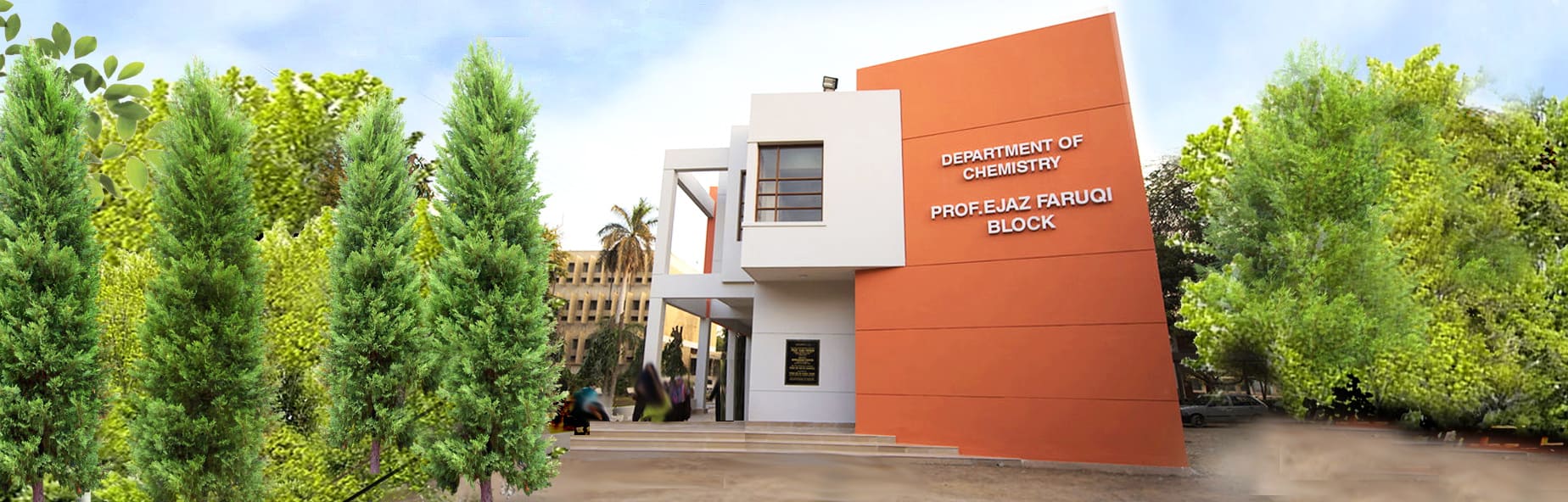
The department is comprised of two large buildings having spacious classrooms and laboratories. The curriculum focuses on practical experience supported by highly qualified and experienced professionals with well-equipped labs. Presently, four working labs are dealing with synthesis, analytical, instrumental and experimental work for postgraduate students. Three full-fledged research labs are operating in the Department and Research Institute of Pharmaceutical Sciences (RIPS) providing facilities regarding drug designing, drug development, drug stability, and analysis & method development.
Events
- Seminar on The Quality Management (TQM)
- Lectures Series on current advances in the field of Drug Design and Development.
- Workshop on Instrumental Analysis.
- Poster Exhibition on Medicinal Chemistry related to Chemistry and Health Sciences.
- Independent search projects for Post Graduate Students.
Contact
For further information please contact:
DEPARTMENT OF PHARMACEUTICAL CHEMISTRY
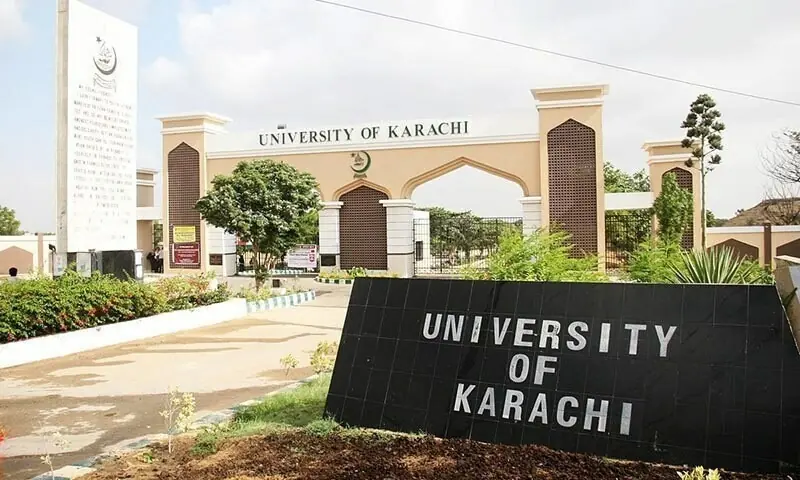
UNIVERSITY OF KARACHI, KARACHI-75270
Telephone: 99261300-06 Ext: 2203
Email: pc@uok.edu.pk
Apply to the Department of Pharmaceutical Chemistry
Explore admissions pathways through the Faculty of Pharmacy & Pharmaceutical Sciences.