



Biotechnology
Department of Biotechnology
Faculty of Science
Established in 1996, the Department of Biotechnology imparts quality education in this multidisciplinary field at both undergraduate and postgraduate levels.

Recombinant DNA Technology
Applications in medicine, diagnostics and hereditary disease treatment.
Industrial Biotechnology
Production of enzymes, antibiotics, vitamins and monoclonal antibodies.
Agricultural Biotechnology
Genetically modified crops and improved food production.
Biotechnology is the application of biological systems to technical and industrial processes, using biological catalysts — from simple enzymes to complex microorganisms or eukaryotic cells — to convert a substrate into a desired product. It has large, highly profitable modern industrial applications including recombinant DNA technology, one of the most revolutionary branches of modern science, with a profound impact on medicine, diagnostics and the development of biopharmaceutical drugs and vaccines.
CareersCareer Opportunities
Graduates of Biotechnology usually find employment in Pakistan's pharmaceutical and food industries, with further opportunities in clinical laboratories, research institutes and teaching institutions.

Introduction
Chairperson: Dr. Raheela Rahmat Zohra (Assoc. Prof.)
The Department was established in 1996 with an objective of imparting quality education in the multidisciplinary field of Biotechnology at both undergraduate and postgraduate levels.
Biotechnology is defined as the application of biological systems to basic and technical and industrial processes. These processes are based on the use of some form of biological catalyst in the conversion of a substrate to a desired product. These biological catalysts are simple as enzymes or highly complex microorganisms or eukaryotic cells.
Biotechnology can be viewed as a group of useful, enabling technologies with wide and diverse applications. It has large, highly profitable, modern industrial outlets of great value to society e.g., DNA recombinant technology, most revolutionary branch of the modern science and have a profound impact on medicine, contributing to the diagnostics and cure of hereditary defects and serious disease and the development of new biopharmaceutical drugs and vaccines for human and animal use. It also deals with the modification of microorganisms, plants and farm animals for improved and tailored food production and to increased opportunities for environmental remediation and protection.
New technologies dealing with plant and animal breeding are much faster and have lower costs. Genetically modified crops are growing exponentially. The field is further exemplified with the industrial production of enzymes like proteases, amylases, celluloses and lipases, industrial manufacturing plants for milk and milk products,alcohols, organic acids, antibiotics, vitamins, growth promoting factors and monoclonal antibodies.
Career Opportunities
Graduates of Biotechnology usually get employment in well-known Pharmaceutical and food industries of Pakistan. Countless opportunities are available in clinical Laboratories, research institutes and teaching Institutions.
Faculty
A highly qualified faculty including visiting professors from allied departments and sister organizations are involved in imparting quality education.
Associate Professor
Dr. Raheela Rahmat Zohra
Dr. Saif Ullah
Assistant Professor
Dr. Shafaq Aiyaz Hassan
Dr. Mahnaz Ahmad
Dr. Erum Hanif
Lecturers
Ms. Shumaila Samad Khan
Programs
Degree Programs Available
- B.S (4 years)
- MS
- Ph.D.
Eligibility & Allocated Seats
- BS: Intermediate (Pre-Medical/ Pre-Engineering) - 60 seats
- B.S (3rd year): B.Sc. with one subject being Microbiology or Biochemistry - 50 seats
- Admissions are granted on the basis of an aptitude test. Proficiency in English language shall form part of the test.
- Minimum Qualifying marks in the entrance test is 50% (Fifty percent)
- Merit list of candidates qualifying in the Entrance Test will be prepared for final selection as per following weightage:
- Prerequisite Academic Record-50%
- Entrance Test-50% (Sample test)
Mission & Objectives
Programme Mission Statement:
To foster world-class biotechnologists with a potential to innovate, invent and disseminate knowledge for the benefit of society and environment.
Program Objectives:
- To develop a positive attitude in students for lifelong learning.
- To make students able to work effectively, responsibly, ethically and safely as an individual or team.
- To make students competent to integrate knowledge from multiple disciplines of biotechnology and to customize it in teaching, research and industry to solve problems.
- To train students to venture small to various level of entrepreneurship with the understanding of science-based business.
Courses
BACHELOR OF SCIENCE (BS) FOUR YEAR PROGRAMME IN BIOTECHNOLOGY
| Year-1 | Sr. No. | Course No. | Course Title | Credit Hr. | Category | |
| Semester - I | 1 | BTH-351 | Cell Biology | 3 (2+1) | Major | |
| 2 | BTH-353 | Organic Chemistry | 3 (2+1) | Interdisciplinary | ||
| 3 | BTH- 355 | Biochemistry I | 3 (2+1) | Interdisciplinary | ||
| 4 | 300.1 (N.Sc) | Natural Science- Principles of Biology | 3 (3+0) | General Education | ||
| 5 | 300.1 (U) | Arts and Humanities (Urdu) | 2 (2+0) | General Education | ||
| 6 | 300.1 (I.S) | Islamic Studies (Ethics for non-Muslim students) | 2 (2+0) | General Education | ||
| 7 | 300.1 (Civ/Com) | Civics and Community Engagement | 2 (2+0) | General Education | ||
| Total Credit Hours | 18 | |||||
| Semester - II | 1 | BTH-352 | Microbiology | 3 (2+1) | Major | |
| 2 | BTH-354 | Ecology and Biodiversity | 3 (3+0) | Interdisciplinary | ||
| 3 | BTH-356 | Biochemistry- II | 3(2+1) | Interdisciplinary | ||
| 4 | 300.2 (Soc.Sc) | Social Science (Economics) | 2 (2+0) | General Education | ||
| 5 | 300.2 (F.Eng) | Functional English | 3 (3+0) | General Education | ||
| 6 | 300.2 (P.S) | Ideology and Constitution of Pakistan | 2 (2+0) | General Education | ||
| 7 | 300.2(P.St.) | Pakistan Studies | 2 (2+0) | General Education | ||
| 8 | 300.2 (Entr) | Entrepreneurship | 2 (2+0) | General Education | ||
| Total Credit Hours | 20 |
| Year-2 | Sr. No. | Course No. | Course Title | Credit Hr. | Category | |
| Semester - III | 1 | BTH-451 | Introduction to Biotechnology | 3 (3+0) | Major | |
| 2 | BTH-453 | Principles of Genetics | 3 (3+0) | Major | ||
| 3 | BTH-455 | Immunology | 3 (2+1) | Interdisciplinary | ||
| 4 | BTH-457 | Physical Chemistry | 3 (2+1) | Interdisciplinary | ||
| 5 | BTH-459 | Time Management and Organizing Skills | 2 (2+0) | General Education | ||
| 6 | 400.1 (E.Writ) | Expository Writing | 3 (3+0) | General Education | ||
| 7 | 400.1 (Q.Reas) | Quantitative Reasoning- I | 3 (3+0) | General Education | ||
| Total Credit Hours | 20 | |||||
| Semester - IV | 1 | BTH-452 | Molecular Biology | 3 (2+1) | Major | |
| 2 | BTH-454 | Virology | 3 (2+1) | Major | ||
| 3 | BTH-456 | Analytical Chemistry and Instrumentation | 3 (2+1) | Interdisciplinary | ||
| 4 | BTH-458 | Biophysiscs | 3 (3+0) | Interdisciplinary | ||
| 5 | 400.2 (ICT) | Applications of Information & Communication Technologies (ICT) | 3 (2+1) | General Education | ||
| 6 | 400.2 (Q.Reas) | Quantitative Reasoning- II | 3 (3+0) | General Education | ||
| Total Credit Hours | 18 |
| Year-3 | Sr. No. | Course No. | Course Title | Credit Hr. | Category | |
| Semester - V | 1 | BTH-551 | Microbial Biotechnology | 3 (2+1) | Major | |
| 2 | BTH-553 | Agriculture Biotechnology | 3 (2+1) | Major | ||
| 3 | BTH-555 | Biostatistics | 3 (3+0) | Major | ||
| 4 | BTH-557 | Bioinformatics | 3 (2+1) | Major | ||
| 5 | BTH-559 | Recombinant DNA Technology | 3 (2+1) | Major | ||
| 6 | 500.1 | Internship | 3 (0+3) | Compulsory | ||
| Total Credit Hours | 18 | |||||
| Semester - VI | 1 | 500.2 | Capstone | 3 (0+3) | Compulsory | |
| 2 | BTH-554 | Food Biotechnology | 3 (2+1) | Major | ||
| 3 | BTH-556 | Methods in Molecular Biology | 3 (2+1) | Major | ||
| 4 | BTH-558 | Scientific Inquiry and Research Methods | 3 (3+0) | Major | ||
| 5 | BTH-560 | Principles of Biochemical Engineering | 3 (2+1) | Major | ||
| Total Credit Hours | 15 |
| Year-4 | Sr. No. | Course No. | Course Title | Credit Hr. | Category | |
| Semester - VII | 1 | BTH- 651 | Industrial Biotechnology | 3 (2+1) | Major | |
| 2 | BTH-653 | Health Biotechnology | 3 (3+0) | Major | ||
| 3 | BTH-655 | Biosafety, Biosecurity and Bioethics | 2 (2+0) | Major | ||
| 4 | BTH-657 | Artificial Intelligence in Biotechnology | 2 (2+0) | Major | ||
| 5 | BTH-659 | Genomics and Proteomics | 3 | Major | ||
| 6 | BTH-6XX | Elective I / Thesis* | 3 | Major | ||
| Total Credit Hours | 16 | |||||
| Semester - VIII | 1 | BTH-652 | Nanobiotechnology | 3 (3+0) | Major | |
| 2 | BTH-654 | Environmental Biotechnology | 3 (2+1) | Major | ||
| 3 | BTH-6XX | Elective II | 3 | Major | ||
| 4 | BTH-6XX | Elective III | 3 | Major | ||
| 5 | BTH-6XX | Elective IV / Thesis* / Project** | 3 | Major | ||
| Total Credit Hours | 15 |
Total Credit Hours of the Program: 140
Note:
The course code of General Education courses will be opted in accordance with the university BS policy unless otherwise.
Internship of 6-8 weeks (3 credit hours); Must be graded by a faculty member in collaboration with the supervisor in the field.
* Thesis in lieu of two elective courses
** Project in lieu of one elective course
List of Elective Courses
| S. No. | Course No. | Course Title | Credit Hours |
| 1 | BTH-656 | Biotechnology Business Applications | 3 (2+1) |
| 2 | BTH-658 | Plant Tissue Culture and Regeneration | 3 (2+1) |
| 3 | BTH-660 | Marine Biotechnology | 3 (2+1) |
| 4 | BTH- 661 | Animal Cell and Tissue Culture | 3 (2+1) |
| 5 | BTH-662 | Medical Biotechnology | 3 (2+1) |
| 6 | BTH-663 | Advances in Immunology | 3 (2+1) |
| 7 | BTH-664 | Biofuels and Biorefineries | 3 (2+1) |
| 8 | BTH-665 | Molecular Diagnostics | 3 (2+1) |
| 9 | BTH-666 | Fungal Biotechnology | 3 (2+1) |
| 10 | BTH-667 | Forensic Biotechnology | 3 (3+0) |
Scope
Scope of Biotechnology Integration of biological sciences with other disciplines particularly chemistry and process engineering has resulted in the emergence of novel concepts and technologies with applications in and consequences for agriculture, medicine, health care, industry, environmental pollution cleaning of oil spills in the seas, development of safe and environment-friendly bioinsecticides, energy generation and several other sectors of activity.
The common denominator which links these areas together are cells and products derived from them.
The use of bio-cellular materials in conjunction with chemical and process engineering have ushered in a new kind of revolution wherein it is possible to create transgenic animals plants and microbes which otherwise could not have come into being in the foreseeable future.
For that matter without Biotechnology it would not be possible to create bio-degradable plastics or try to replace defective genes with good ones in patients afflicted with potentially or certainly fatal hereditary diseases.
The pivotal role in the unfolding biotechnological revolution is of the recombinant DNA technology popularly known as Genetic Engineering. Major Problems facing Pakistan These are:
Providing adequate food, both from the agricultural and animal husbandry sectors, for a fast-growing population.
- Low productivity.
- Salinity.
- Water-logging.
- Water shortage.
- Use of pesticides, which have injurious effect on plants, soil and ecology.
- Shortage of energy, and unwise use of our limited gas resources as fuel.
- Pollution (air, water and noise).
Use of industrial processes which are either capital-intensive or high-energy consuming or both, and in which our national resources are already over-strained.
Biotechnology offers processes which are less expensive, less injurious and yield speedier results. But the question of use of appropriate technology demands not only proper study and selection of the processes evolved by the developed countries but also their adaptation to suit our needs.
In addition, we have to build up the requisite infrastructure and develop our human resources to create a highly trained cadre of scientists, research scholars and technicians.
While Pakistan has a couple of institutes providing facilities for postgraduate research and training, there is no department or institute which provides for organized teaching in biotechnology at all levels i.e. undergraduate, graduate and post-graduate. The newly established department will fill this gap.
The graduating students will be able to play a significant role in the national development through their services rendered to educational institutions, R&D organizations and existing and future industrial setups.
Alternatively, they will be able to effectively compete for admission in foreign institutions for doctoral and post-doctoral training or for jobs in biotechnology companies.
Contact
For further information please contact:
DEPARTMENT OF BIOTECHNOLOGY
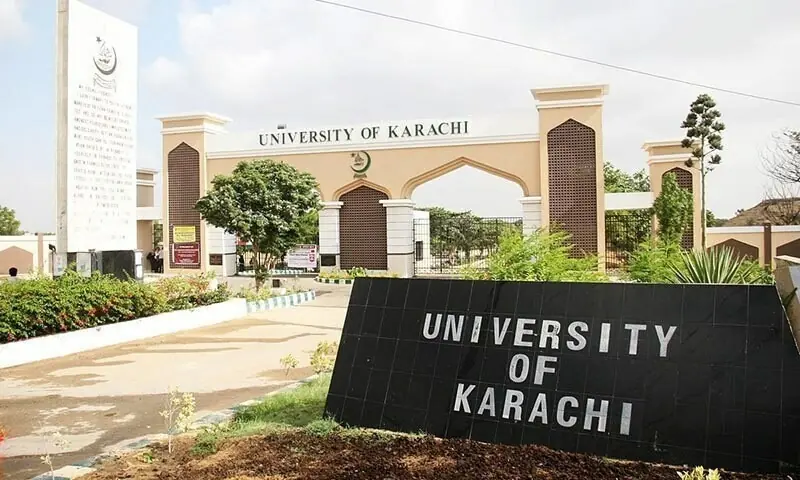
UNIVERSITY OF KARACHI, KARACHI-75270
Telephone: 99261300-06 Ext: 2474
Email : biotechnology@uok.edu.pk
Apply to the Department of Biotechnology
Explore programs and pathways through the University's admissions process.

