

Faculty of Pharmacy — Overview
Faculty of Pharmacy & Pharmaceutical Sciences
Overview
The Faculty owes its origin to the Department of Pharmacy, established in 1964 in response to the need for a better drug delivery system in hospitals and retail pharmacy, and to serve Pakistan's pharmaceutical industry — 90% of which, both national and multinational, is based in Karachi.


Structure
Five Teaching & Research Departments
5 Departments
Pharmaceutics, Pharmaceutical Chemistry, Pharmacognosy, Pharmacology, Pharmacy Practice.
2,000+ Students
Pursuing Pharm.D., M.Phil. and PhD degrees.
Research Institute
A dedicated Research Institute of Pharmaceutical Sciences.
The Department of Pharmacy was raised as the first full-fledged Faculty of Pharmacy in the country. Beyond its five teaching and research departments, the Faculty also operates a Research Institute of Pharmaceutical Sciences conducting research on multiple aspects of drugs.
CareersCareer Opportunities
Pharmacy forms the edifice of the health care system. While opportunities in developed countries have shifted toward patient-oriented clinical pharmacy, in Pakistan roughly 75% of opportunities remain in the industrial sector — manufacturing, quality control and regulatory affairs.
- Pakistan's first full-fledged Faculty of Pharmacy, established 1964.
- Five specialized teaching and research departments.
- A dedicated Research Institute of Pharmaceutical Sciences.

Introduction
Dean: Prof. Dr. M. Harris Shoaib. Profile
The Faculty of Pharmacy & Pharmaceutical Sciences at the University of Karachi owes its origin to the Department of Pharmacy, which was established in 1964. The Department of Pharmacy was founded in response to the need of better drug delivery system in hospitals and retail pharmacy, and also to cater the ever growing need of pharmaceutical industries because 90 percent of the drug based industry in Pakistan, both national and multi-national, is located at Karachi.
The Department of Pharmacy was raised as the first full-fledged Faculty of Pharmacy in the country. The faculty comprises five teaching and research departments viz. Pharmaceutics, Pharmaceutical Chemistry, Pharmacognosy, Pharmacology and Pharmacy Practice. More than 2000 regular students are today pursuing their studies leading to the award of Pharm. D., M. Phil. and Ph.D degrees.
Apart from these departments the faculty also has a Research Institute of Pharmaceutical Sciences in which research on different aspects of drugs is conducted.
Career Opportunities
Pharmacy as a distinct profession forms the edifice of the health care system on which lies success of well-being of the community. With the rise of population worldwide during the last few decades, it has been realized that the conventional traditional medical and healthcare services are unable to pay any significant role in the overall improvement of health status. This realization has driven all health professionals to the common goal of disease prevention and health promotion. In developed countries the clinical direction of Pharmacy has laid emphasis on the manipulative product-oriented and distributive skills and focuses more on the public health awareness. Today the Pharmacy profession has become highly patient-oriented which this has created much more opportunities for the pharmacists in hospital and community especially in the USA, Canada, Australia and the Middle East, while in Pakistan still 75% opportunities are in the industrial sector.
Deans' Message
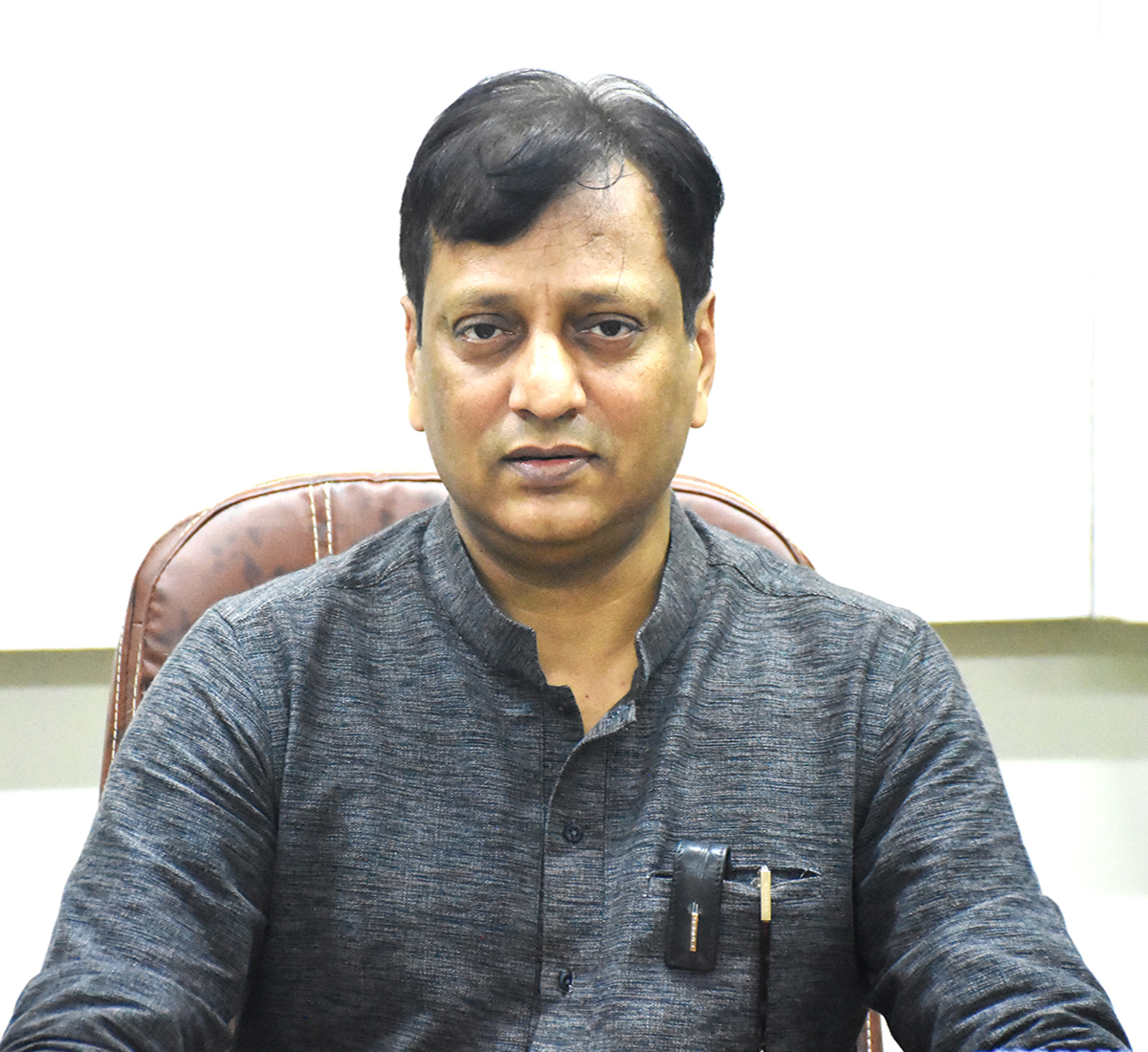
Welcome to the Faculty of Pharmacy and Pharmaceutical Sciences at the University of Karachi. Our faculty is committed to excellence in pharmacy education, research, and community service. Since its inception, back in 1964, the faculty has played a vital role in advancing pharmaceutical sciences and contributing significantly to the healthcare sector across the globe. The faculty is ranked among top 200 universities world-wide by QS world ranking by subject 2024. |
 |
The faculty is comprising of five specialized departments namely Pharmaceutical Chemistry, Pharmaceutics, Pharmacognosy, Pharmacology, and Pharmacy Practice. Each department is staffed with accomplished faculty members and dedicated researchers who are committed to imparting high-quality education and advancing research in their respective fields. All the departments work collaboratively and adapt an integrated approach to ensure the holistic understanding of the discipline for our students.
We are proud of our renowned alumni, who have made significant contribution to the pharmaceutical industry, academia, and healthcare services both nationally and internationally. Their achievements reflect the quality of education and training they received at the University of Karachi. Our alumni serve as a source of inspiration for our current students and demonstrate the impact of a solid foundation in pharmaceutical sciences.
Research is a keystone to our success as our research teams are actively engaged in cutting-edge research aimed at discovering new drug delivery systems, improving patient outcomes, and ensuring the safety and efficacy of pharmaceuticals. Our research endeavours are supported by state-of-the-art facilities and a dedicated team of scholars and experts who are leaders in their respective fields.
We are also committed to fostering strong industry connections and community engagement. Through partnerships with healthcare institutions, pharmaceutical companies, and regulatory bodies, we ensure our students are well-prepared for diverse professional roles and contribute meaningfully to society.
Thank you for visiting our website. Whether you are a prospective student, a current member of our academic community, or a visitor interested in our work, I invite you to explore our programs and learn more about the impact of our faculty.
Prof. Dr. Muhammad Harris Shoaib
Dean,
Faculty of Pharmacy and Pharmaceutical Sciences
- Program Objectives and Learning Outcomes :: Click here
- Acceptance Requirements and Criteria :: Click here
- Practical Training (including the nature, duration, and location of the training) :: Click here
- Theoretical and Practical Evaluation Mechanism :: Click here
- Numbers and Specializations of Faculty Members :: Click here
- Standard Programs Upon Which the Program is Designed :: Click here
Programs
Eligibility
- Pharm-D (Five years Program): H. S. C. (Biology Group) or equivalent with a minimum of 60% marks (‘B’ grade)
In addition, the three- and four-year degree holders can upgrade their degrees to Pharm. D. (five-year degree program) after completion of deficiency courses.
Allocated Seats
- 200 seats are available on merit basis for Pharm. D program in morning + reserved seats including foreign students.
- 50 seats are available for one year program for the students holding four year degree in order to upgrade to Pharm. D. (five years program).
Pharm. D catalogue : Click here
Rules & Requirement
Pharmacy is a distinct profession and on it lies the success of any health program. With the rise of population world wide during the last few decades, it has been realized that the traditional medical and health services now play a limited role in the overall improvement of health status. This fact has driven all health professionals to the common goal of disease prevention and health promotion. In developed countries the clinical direction of Pharmacy has deemphasized the manipulative product oriented and distributive skills and focused more, on the public health awareness. Today, the pharmacists’ attention is directed towards the patient, his environment, and his state of general well-being. Pharmacy has achieved many successes in the past few years, it has undergone a transformation whereby both practice and teaching of the subject has been placed on more quantitative, rational and scientific bases, so much so that the Drug Oriented Pharmacy has now attired itself to Patient Oriented Pharmacy in most of the Western World.
In United States, the Pharmacy professional is highly patient oriented, they have much more opportunities in hospital and community environment. Same trend is being followed in Middle East market, whereas locally in Pakistan, 75% opportunities are in Industrial sector. Although in Pakistan, this sector is also now reaching a level of saturation, which will result in diversion to other branches like marketing, hospital and community. Accordingly we will have to prepare our graduates for the changing trends, especially if they aim to work globally. This has become possible by reviewing our Pharmacy syllabi and changing the same to meet the local and global needs and requirements.
The Faculty of Pharmacy, University of Karachi after a long and thorough discussion as well as practical work, converted the curriculum proposed by PCP (based on annual examination system) into semester examination system. There are 200 credit hours spread over 5 years. The Faculty has also designed one year deficiency courses of 2 semester duration for those holding 4 years B.Pharm degree in order to upgrade to Pharm-D (5 years program) if they so desire. These courses have been approved by the Board of Studies of each department as well as by the Board of Faculty.
SYSTEM OF EXAMINATION AND GRADING
1.Terminal Examination
The examination held at the end of semester after the completion of a course shall be known as Terminal Examination. It will carry 100 marks. This examination is a passing head i.e., a student must for each course obtain a minimum of 50 marks in this examination.
2.Grading System
Grades given to a student in each course shall be of two types:
a. Numerical Grade (NG)
Assessment of performance on the basis of marks out of 100 fixed for a course of 3 or 4 credit hours unit is NG.
b. Alphabetical Grade (AG)
Equivalent of numerical grades in terms of alphabets shall be termed as alphabetical grades. (Each letter carries a value in terms of numerical points).
c. Grading
| Marks | Grade | Grade Point |
| 90 & above | A+ | 4.0 |
| 85-89 | A | 4.0 |
| 80-84 | A- | 3.8 |
| 75-79 | B+ | 3.4 |
| 71-74 | B | 3.0 |
| 68-70 | B- | 2.8 |
| 64-67 | C+ | 2.4 |
| 61.63 | C | 2.0 |
| 57-60 | C- | 1.8 |
| 53.56 | D+ | 1.4 |
| 50-52 | D | 1.0 |
| Below 50 | Fails | 0.0 |
d. Incomplete Grade
For incomplete courses no point shall be given.
e. Grade Point Ratio (GPR)
Points obtained in each course shall be multiplied by the number of Credit Hours specified for that course, and then a grade point ratio (GPR) shall be calculated. For example, the result of a 1st year student in a semester may be as follows:
i. Cumulative Grade Point Ratio (CGPR)
This is obtained by adding all the Grade Points of the courses during 5 years study period and dividing the total by the total number of credit hours.
3.Requirement for the Award of Pharm-D. Degree
a. A student must have passed all prescribed courses.
b. A student must have obtained a minimum CGPR 2.45
4.Rules Concerning the Promotion and Repetition of Course
A student would be promoted to next higher class upon clearing 80% of courses. In case of any misinterpretation and discrepancy Deans' Committee would be the final authority in deciding any representation.
(Approved by the Academic Council on 17-3-1999, vide Resolution No.1).
5.Attendance
Attendance in each subject is compulsory for all students and no student shall be eligible to appear at any University examination unless he has attended 75 per cent attendance in the course.
i. The attendance of students admitted in the Faculty will be counted from the 1st day of semester and not from the date of admission.
ii. Students called for national duty such as participation in Olympics, National Games, Inter-varsities, and going to perform Haj would be given exemption in attendance for the actual period of national duty/Haj. These cases would be decided individually.
iii. If a student is unable to attend classes continuously for 15 days or more without informing the Dean/Chairperson of the Department (in writing) his/her admission will also stand cancelled. In case of illness or other similar situation, application along with a medical certificate from a registered medical practitioner duly verified by the Senior Medical Officer of the University must be submitted within two days after the incident.
iv. Original attendance register is to be submitted to the Dean/ Chairperson for record and future reference.
6.Maximum Duration for Completion of Degree
i. Degree enrollment of the Pharm-D. will remain valid for two more years after the expiry of the required duration for the completion of the Pharm-D. degree (i.e. 5 years).
ii. However a student unable to complete his/her degree requirement within the validity of his/her enrollment, will have to re-validate/extend his/her enrollment for not more than 2 years by paying a prescribed fee with the permission of Dean.
7.Cancellation of Admission/Readmission
i. If a student admitted in Pharm-D. 1st year class for the first time fails to attend the class for the first 15 days his/her admission shall stand cancelled.
ii. If a student absents himself/herself for 15 consecutive days during the semester without any information, his/her admission shall also be cancelled. Re-admission would be granted in the same semester by the Dean if he/she can complete his/her attendance requirement.
iii. If a student is unable to continue his/her studies during his/her studies, his/her admission will be treated as cancelled. He/she may however be re-admitted after the payment of prescribed fee in the same semester where he/she had left. Permission would be granted by Dean.
iv. He/she may be allowed 3 chances to pass/get promoted in the next higher class if he/she has completed the attendance requirements.
8.Unfair Means
All the cases of unfairmeans will be forwarded to the Committee appointed for the purpose and the matter will be dealt with in accordance with the rules and regulationsof the University.
9.Interpretation of Semester Rules
The decision of the Deans' Committee would be final for the interpretation of semester rules. In case of any appeal Deans' Committee would dispose it off on its merits.
Departments
Facilities
The Faculty of Pharmacy has well equipped laboratories in all the four departments, fully capable of catering the teaching and research needs of the various programs offered. Moreover, there is a good library of the faculty. Furthermore the Faculty has an Institute of Pharmaceutical Sciences under its auspices so as to give more impetus to scientific and technological research and development.
Foreign Students
Faculty of Pharmacy admits 20 foreign students to Pharm-D. degree course every year. These admissions are not given directly but only after being duly processed by the concerned Embassies and the Ministry of Economic Affairs in Islamabad.
Extra Curricular Activities
Annual Tour
Students of B.Pharm./Pharm-D. final year tour the country as a part of their training to get acquainted with the various pharmaceutical industries as well as various Pharmacy Institutions (public sector) of the country, while the junior students visit the local industries. Expenses of both trips are borne by University of Karachi.
Student Activities
Pharmacy students have been very active to organize functions which include promotion of academic and extra-curricular activities, the later include social and literary functions as well as assistance to students in their day-to-day problems. They also publish two or three magazines every year from their own resources, to which students contribute their writings and are supplemented by teachers.
Incentives and Assistance
President's Award
Ministry of Health, Government of Pakistan gives this medal to the student who tops in over all performance during the 5 years Pharm-D. courses.
Research fellowships
University of Karachi, the Higher Education Commission and Pakistan Science Foundation grant fellowships for talented students enrolled for M.Phil and Ph.D. programs.
Fee Remissions
Over a hundred deserving undergraduate and postgraduate students are given full-fee remissions.
Duty Loan
These interest-free loans are granted by Banker's Equity of Pakistan to outstanding and deserving students. Moreover, Pakistan Fauji Foundation and other social and cultural organizations give financial assistance to needy students
Gold Medals
- Hakimsons Chemical Industries Gold Medal is awarded to a student, who performs best in the 4 year B.Pharm./5 years Pharm-D. degree courses.
- Al-Haj Ikram Siddiqui Gold Medal goes to the most outstanding M.Pharm. student of the faculty
- Prof. S.M.S. Zoha Gold Medal is awarded to a student who secured best CGPR in Pharmacy at the B.Pharm/Pharm-D examinations.
- Fauzia Rashid Gold Medal is received by a student who stood First at the B.Pharm/Pharm-D examinations.
- Amna Feroz Gold Medal goes to a student who stood First at the B.Pharm/Pharm-D examinations.
Professional Activities
Pakistan Pharmacy Council was established after the enactment of Pakistan Pharmacy Act in 1967. This Council, along with Pakistan Pharmaceutical Manufacturing Association, Pakistan Pharmacists Association and Pharamakarian (an alumni association of the Faculty of Pharmacy, University of Karachi), is playing a vital role in propagating and establishing professional traditions of pharmacy in the country.
Degrees awarded
Ph.D.
S. No. |
Name of Candidate |
Research Supervisor |
Year |
1 |
Tauqir Ahmed |
Dr. Iqbal Ahmad |
1978 |
Research Topic: Studies on the stability of sulphacetamide and degradation products. |
|||
2 |
Muhammad Arif |
Prof. Dr. Zafar S. Saify |
1988 |
| Research Topic: Synthesis of some phenethylamine derivatives with potential anti-cholesterolemic activity. | |||
3 |
Qazi Fasihullah |
Prof. Dr. Iqbal Ahmed |
1989 |
Research Topic: Photolysis of flavins in aqueous and organic solvents. |
|||
4 |
S. Moazzam Haider |
Prof. Dr. Zafar S. Saify |
1995 |
Research Topic: Synthesis of 7-azaindole and nicotinamide derivatives having potential therapeutic activity. |
|||
5 |
Mansoor Ahmed |
Dr. Muhammad Arif |
1995 |
Research Topic: Synthesis of some nicotinic acid derivatives as potential therapeutic agents and extraction, isolation of active component of Momordica charantia. |
|||
6 |
M. Saeed |
Prof. Dr. Zafar S. Saify |
1995 |
Research Topic: Synthesis of piperidine derivatives having potential therapeutic properties. |
|||
7 |
Hamida Tabassum |
Prof. Dr. Najma Sultana |
1995 |
Research Topic: Chemical and antibacterial studies of mixed ligand transition metal complexes. |
|||
8 |
Abdullah Khan |
Prof. Dr. Zafar S. Saify |
1996 |
Research Topic: Synthesis and biological studies on some nitrogenous heterocycles. |
|||
9 |
Riaz Hussain Shaikh |
Prof. Dr. Iqbal Ahmed |
1997 |
Research Topic: Riboflavin sensitized photo-degradation of ascorbic acid and dehydroascorbic acid. |
|||
10 |
Faheem Ahmed |
Prof. Dr. Zafar S. Saify |
1998 |
Research Topic: Studies on the fatty acid and other lipid constituents of fish origin. |
|||
11 |
Faiyaz Hussain Madani |
Prof. Dr. Tauqir Ahmed |
1998 |
Research Topic: Photolysis and interaction of thiamine hydrochloride with riboflavin in aqueous solution. |
|||
12 |
Hanifa Shahnaz Siddiqui |
Prof. Dr. Zafar S. Saify |
1999 |
Research Topic: Chemical investigation of Bryonia Dioca and synthesis of some piperidine derivatives of potential biological interest. |
|||
13 |
Muhammad Obaidur Rehman |
Prof. Dr. Tauqir Ahmed |
2000 |
| Research Topic: A study on feto placenta health in Karachi women. | |||
14 |
Masroor Ahmed |
Prof. Dr. Tauqir Ahmed |
2001 |
Research Topic: A study of photochemical interaction of cyano-cobalamin with thiamin and pyridoxine. |
|||
15 |
Muhammad Afzal |
Prof. Dr. Najma Sultana |
2001 |
Research Topic: Studies of cephradine metal interactions |
|||
16 |
Izhar Ahmed Ansari |
Prof. Dr. Qazi Nawab Manzar |
2002 |
Research Topic: Photolysis and interactions of cyanocobalamin with some B-vitamins and asorbic acid in parenteral solutions. |
|||
17 |
Sohail Hassan |
Prof. Dr. Zafar S. Saify |
2003 |
Research Topic: Isolation, characterization of fatty acids in marine fishes and study of their hypolipidemic effect in comparison with gem fibrozil and related compounds. |
|||
18 |
Shamim Akhtar |
Prof.Dr.Muhammad Arif |
2003 |
Research Topic: Design and synthesis of some new derivatives of isonipecotamide as potential therapeutic agents. |
|||
19 |
Kamran A. Chishti |
Prof. Dr. Zafar S. Saify |
2003 |
Research Topic: Synthesis of some nicotinic acid derivates having potential therapeutic activity. |
|||
20 |
Naeem Butt |
Prof. Dr. Zafar S. Saify |
2004 |
Research Topic: Synthesis of some biologically active piperidine based compounds. |
|||
21 |
Farzana Hassan Ali |
Prof. Dr. Zafar S. Saify |
2004 |
Research Topic: Synthesis of some piperidine derivatives having potential biological activities. |
|||
22 |
Nousheen Mushtaq |
Prof. Dr. Zafar S. Saify |
2004 |
Research Topic: Synthesis of some phenacyl derivatives of pyrrolidine and piperidine having potential biological activities. |
|||
23 |
Ahsan Zamir Siddiqi |
Prof. Dr. Najma Sultana |
2006 |
Interaction studies of few quinolone antimicrobial agents with essential and trace elements |
|||
M.Phil.
S. No. |
Name of Candidate |
Research Supervisor |
Year |
|
1 |
Anwar Ejaz Beg |
Dr. Iqbal Ahmad |
1974 |
|
Research Topic: A study of the thermal degradation of riboflavin in alkaline solution. |
||||
2 |
M. Azhar Ali Faridi |
Dr. Iqbal Ahmad |
1976 |
|
Research Topic: Multicomponent spectorophotometric analysis of pharmaceutical compounds |
||||
3 |
Tanveer Shahla |
Dr. Tauqir Ahmed |
1978 |
|
Research Topic: Evaluation of pharmaceutical packaging material. |
||||
4 |
M. Arshad Arayne |
Dr. Zafar S. Saify |
1981 |
|
Research Topic: Synthesis and biological properties of 7-azaindole derivatives. |
||||
5 |
Shahnaz Naim |
Prof. Dr. Zafar S. Saify |
1987 |
|
Research Topic: Synthesis of some 1, 4 oxazine derivatives of potential biological interest. |
||||
6 |
Mushtaq Noorwala |
Dr. Najma Sultana |
1989 |
|
Research Topic: Studies on the stability of acetylsalicylic acid and its derivatives for parenteral use. |
||||
7 |
S. Safeer Haider Zaidi |
Prof. Dr. Tauqeer Ahmed |
1991 |
|
Research Topic: A study on photodegradation of mestranol. |
||||
8 |
Akhtar Mian |
Dr. Najma Sultana |
1994 |
|
Research Topic: Studies on transition metal mixed ligand complexes. |
||||
9 |
Sohail Hassan |
Prof. Dr. Zafar S. Saify |
1996 |
|
Research Topic: Isolation, characterization of fish oil and study of their hypolipidemic effects in comparison with fivric acid derivatives. |
||||
10 |
Tehmina Ismail |
Prof.Dr. Waqar Hussain |
1996 |
|
Research Topic: A study of the stability and interaction of hydroxocobalamin with ascorbic acid. |
||||
11 |
Tasneem Mubeen |
Prof. Dr. Najma Sultana |
1996 |
|
Research Topic: Solvent effect on the photostability of vitamin A and analogues. |
||||
12 |
Qaiser Jamal Hasan |
Prof. Dr. Zafar S. Saify |
1996 |
|
| Research Topic: Studies on the fatty acid and other lipids constituents from fresh water fish/effect of fish oil with nicotinic acid on lipid parameters. | ||||
13 |
Fouzia Khanum |
Prof. Dr. Najma Sultana |
1997 |
|
Research Topic: Spectrophotometric and microbiological analysis of cephalosporin series metal complexes. |
||||
14 |
Hayat Muhammad |
Prof. Dr. Tauqir Ahmed |
1997 |
|
Research Topic: Stability of sulphamethoxazole in aqueous solutions. |
||||
15 |
Ahsan Zamir Siddiqui |
Prof. Dr. Najma Sultana |
1997 |
|
Research Topic: Erythromycin metal interactions. |
||||
16 |
Azfar Hamid Siddiqui |
Prof. Dr. Najma Sultana |
1998 |
|
Research Topic: Mefloquine metal interactions. |
||||
17 |
Iftikhar Hussain |
Prof. Dr. Qazi Nawab Manzar |
1998 |
|
Research Topic: Colorimetric determination of indolic drugs. |
||||
18 |
S. M. Masroor Afzal |
Prof. Dr. Najma Sultana |
1998 |
|
Research Topic: Ceftazidime H2-receptor antagonists inter-actions. |
||||
19 |
Syed Ashraf Ahmed |
Prof. Dr. Najma Sultana |
1999 |
|
Research Topic: Phyrimethamine metal nteractions. |
||||
20 |
Nousheen Mushtaq |
Prof. Dr. Zafar S. Saify |
1999 |
|
Research Topic: Synthesis of some 7-Azaindole and piperidine derivatives having potential biological activity and the biological studies of some herbal extract. |
||||
21 |
Syed Ednan Basit |
Prof. Dr. Najma Sultana |
1999 |
|
Research Topic: Ceftizoxime metal interactions. |
||||
22 |
Fozia Noor |
Prof. Dr. Zafar S. Saify |
2000 |
|
Research Topic: Synthesis of some piperidine derivatives having potential biological activity and the biological studies of some herbal extracts. |
||||
23 |
M. Javaid Farhad |
Prof. Dr. Waqar Hussain |
2000 |
|
Research Topic: Synthesis of some tryptamine derivatives having potential therapentic activity |
||||
24 |
Syed Abbas Raza |
Prof. Dr. Najma Sultana |
2000 |
|
| Research Topic: Interactions studies of cefadroxil with antacids and essential and trace elements. | ||||
25 |
Sarwat Jahan |
Prof. Dr. Najma Sultana |
2000 |
|
Research Topic: Synthesis, spectroscopic and antibacterial studies of cefadroxil metal complexes. |
||||
26 |
Azhar Mehdi |
Prof. Dr. Najma Sultana |
2000 |
|
Research Topic: Interaction studies of cefatriazine with antadids and essential and trace elements |
||||
27 |
Farooq Sami |
Prof. Dr. Zafar S. Saify |
2001 |
|
Research Topic: Preferred three dimensional conformation bupivacaine and ropivacaine on the basis of potential energy calculation. |
||||
28 |
Kiran Rafiq |
Prof. Dr. Najma Sultana |
2001 |
|
Research Topic: In vitro activity of cefuroxime, cefazoline, cefazidime and ceftizoxime in presence of essential and trace elements. |
||||
29 |
Faisal Zahid |
Prof. Dr. Najma Sultana |
2001 |
|
Research Topic: In vitro activity of some cephalosporins in presence of esential and trace elements. |
||||
30 |
Aurangzeb Ansari |
Prof Dr. Najma Sultana |
2002 |
|
Research Topic: Interaction studies of cefaclor with essential and trace elements |
||||
31 |
Shabana Naz |
Prof. Dr. Najma Sultana |
2002 |
|
Research Topic: Synthesis and spectrophotometric studies of drug metal complexes. |
||||
32 |
Syed Zubair Uddin Shah |
Prof. Dr. Najma Sultana |
2002 |
|
Research Topic: Interaction studies of ceftriaxone with antacids and essential and trace elements. |
||||
33 |
Arfa Kamil |
Prof. Dr. Najma Sultana |
2002 |
|
Research Topic: Interaction studies of sparfloxacin with antacids and essential and trace elements. |
||||
34 |
Tariq Ali |
Prof. Dr. Najma Sultana |
2002 |
|
Research Topic: Interaction studies of cefixime with NSAID’s and essential and trace elements |
||||
35 |
Abdul Waheed |
Prof. Dr. Najma Sultana |
2002 |
|
Research Topic: Interaction studies of lisinopril with antacids and essential and trace elements. |
||||
36 |
Sadaf Naved |
Prof. Dr. Najma Sultana |
2003 |
|
Research Topic: Interaction studies of captopril with antacids and essential and trace elements |
||||
37 |
Muhammad Imran Khan |
Prof. Dr. Najma Sultana |
2003 |
|
Research Topic: Interaction studies of diclofenac with H2-receptor antagonists. |
||||
38 |
Muhammad Ali |
Prof. Dr. Najma Sultana |
2004 |
|
Research Topic: Interaction studies of losartan with essential andtrace elements. |
||||
39 |
Asad Iqbal |
Prof. Dr. Najma Sultana |
200 |
|
Research Topic: Interaction studies of meropenem with essential and trace elements |
||||
40 |
Aizaz Fatima |
Prof. Dr. Najma Sultana |
2004 |
|
Research Topic: Degradation studies of azithromycin. |
||||
41 |
Amjad Shakeel Khan |
Prof. Dr. Najma Sultana |
2004 |
|
Research Topic: Interaction studies of omeprazole with essential and trace elements |
||||
42 |
Syed Shahid Ali |
Prof. Dr. Najma Sultana |
2004 |
|
Research Topic: Interaction studies of terazosine hydrochloride with essential and trace elements |
||||
43 |
Noman Ahmed |
Prof. Dr. Najma Sultana |
2004 |
|
Research Topic: Drug interaction studies of antidiabetics drug with essential and trace elements. |
||||
44 |
Kinza Fatima |
Prof. Dr. Najma Sultana |
2004 |
|
Research Topic: Interaction studies of pravastatin with essential and trace elements and H2-receptor Antagonists. |
||||
45 |
Safila Sharif |
Prof. Dr. Najma Sultana |
2004 |
|
Research Topic: Interaction studies of levofloxacin with essential and trace elements. |
||||
46 |
Kashif Abdullah Shaikh |
Dr. Nousheen Mushtaq |
2005 |
|
Research Topic: Synthesis, SAR and biological studies of some N-substituted phenacyl and bromoethyl indole derivatives of piperidine. |
||||
47 |
Navira Yasmeen |
Prof. Dr. Najma Sultana |
2006 |
|
Research Topic: Interaction studies of ofloxacin with essential and trace elements and NSAID. |
||||
48 |
Hina Furqan |
Prof. Dr. Najma Sultana |
2006 |
|
Research Topic: Interaction studies of levofloxacin with essential and trace elements |
||||
49 |
Rakshanda |
Prof. Dr. Najma Sultana |
2006 |
|
Research Topic: Synthesis and antibacterial studies of ciprofloxacin derivatives |
||||
50 |
Aisha Sana |
Prof. Dr. Najma Sultana |
2006 |
|
Research Topic: Interaction studies of fosinopril with NSAID’s and essential an trace elements |
||||
51 |
Reeshanul Qureshi |
Prof. Dr. Najma Sultana |
2006 |
|
Research Topic: Drug interaction studies of captopril with H2- receptor antagonists and NSAID’s |
||||
Research
The Faculty of Pharmacy has so far produced around 70 Ph.Ds and 175 M.Phils. Moreover around 1200 research papers have so far been published in reputed national and international journals by the faculty members. The Faculty takes keen interest in organizing lectures, seminars, conferences and workshops so as to share and update knowledge of the faculty members and students.
Publications
To share the research conducted by the Faculty members the Faculty publishes a highly reputed journal entitled “Pakistan Journal of Pharmaceutical Sciences” recognized by the HEC in “W” category. Apart from this, an annual magazine namely “FARMACIA” is also being published which contains articles authored by the students on different topics. Besides, a newsletter “PHARMA TIMES”, covering different activities in the Faculty, is also brought out every semester by the students.
The Pakistan Journal of Pharmaceutical Sciences is published every three months by the Faculty of Pharmacy. The journal publishes original research articles that confirms to its scope and editorial standards that interest to practicing pharmaceutical scientists and other health care professionals. The journal publishes original research articles, review articles, short communication, and letters to the editor. All submitted papers are subject to an extensive review by the editorial board and by a panel of National/International referees available on line.
To minimize delay between manuscript, submission, decision and publication, authors are requested to follow “Instructions to Authors” found in the journal. Confirming to all the steps listed in that section will facilitate the processing of your manuscript by the Editorial Board. Paper presented in meetings and symposia may also be published provided that they have not been published in their respective proceedings and reference to them is made in such articles. Indexed in Chemical Abstracts, Index Medicus/MedLine/International Pharmaceutical Abstracts (IPA). Publication of the Journal is partially supported in fund by Higher Education Commission and Pakistan Science Foundation.
Pakistan Journal of Pharmaceutical Sciences Website
Contact
For further information please contact:
FACULTY OF PHARMACY
UNIVERSITY OF KARACHI, KARACHI-75270
Telephone: 9261300-06 Ext:2220
Email: deanpharm@uok.edu.pk
Apply to the Faculty of Pharmacy & Pharmaceutical Sciences
Explore admissions pathways through Overview.